

Deliverability
Keep your sending healthy as volume grows.
MailRig handles the setup, warmup, verification, monitoring, and sending controls behind your infrastructure so you can scale outbound without treating deliverability like a second job.


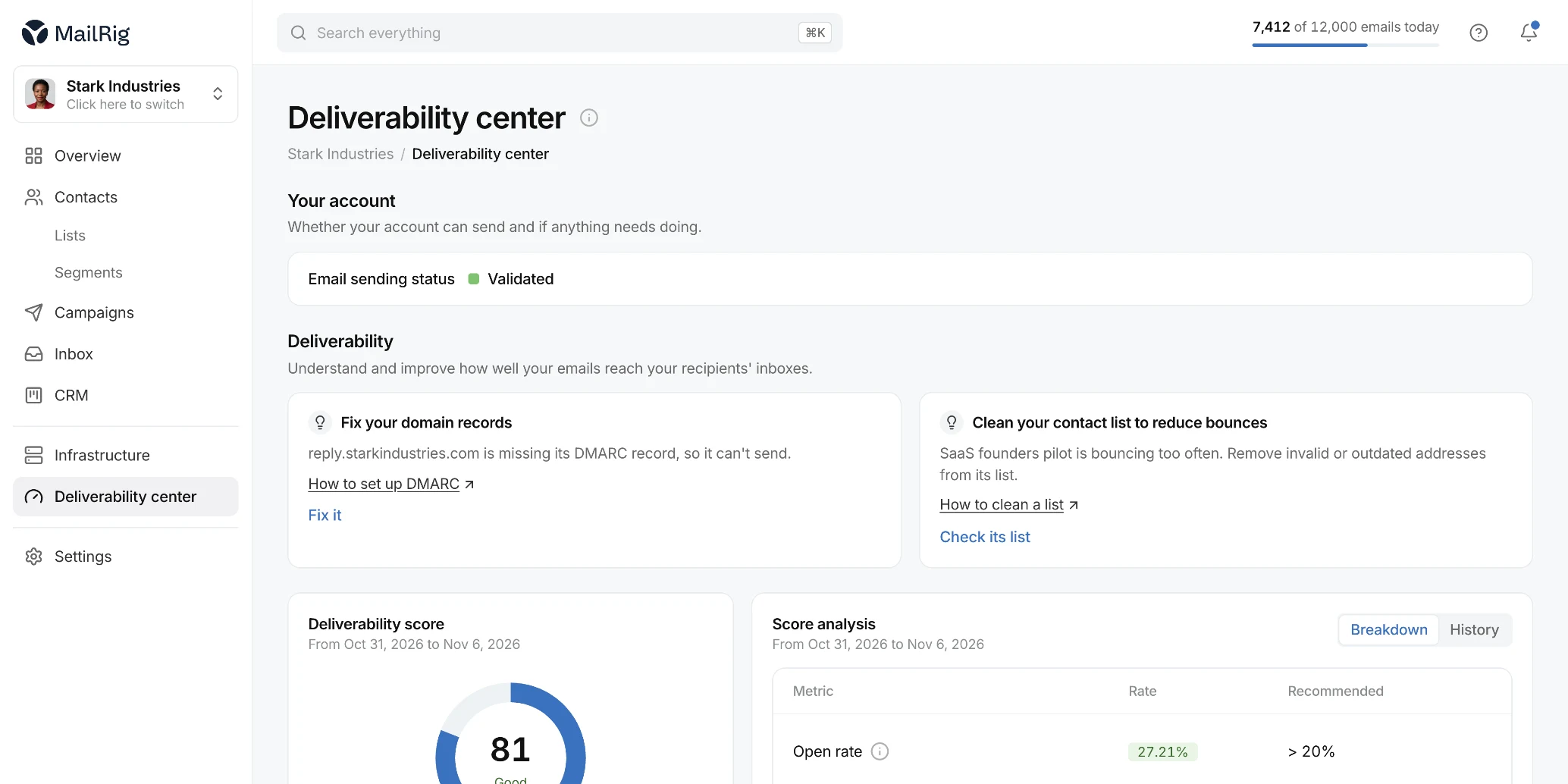
Everything your sending needs to stay healthy.
MailRig handles the infrastructure work that keeps domains, IPs, and campaigns ready to send.
SPF, DKIM, DMARC, reverse DNS, and TLS are configured and checked before sending starts.
Domains and IPs build sending history gradually before you push meaningful volume.
Bad addresses are caught before they become hard bounces and damage your sending reputation.
Catch obvious deliverability problems in your copy before the campaign reaches your list.
Google, Microsoft, Yahoo, and other receiving networks can be monitored and paced independently.
When sending health changes, MailRig can slow affected traffic instead of blindly pushing more volume through it.
Domains and IPs build history on the infrastructure that sends your campaigns.
Addresses are checked before they can turn into hard bounces.
Authentication, warmup, pacing and monitoring run in the same place as the sending.
One provider slows down. The rest keep sending.
MailRig monitors Google, Microsoft, Yahoo, and other receiving networks separately, so a problem with one doesn’t have to throttle everything else.
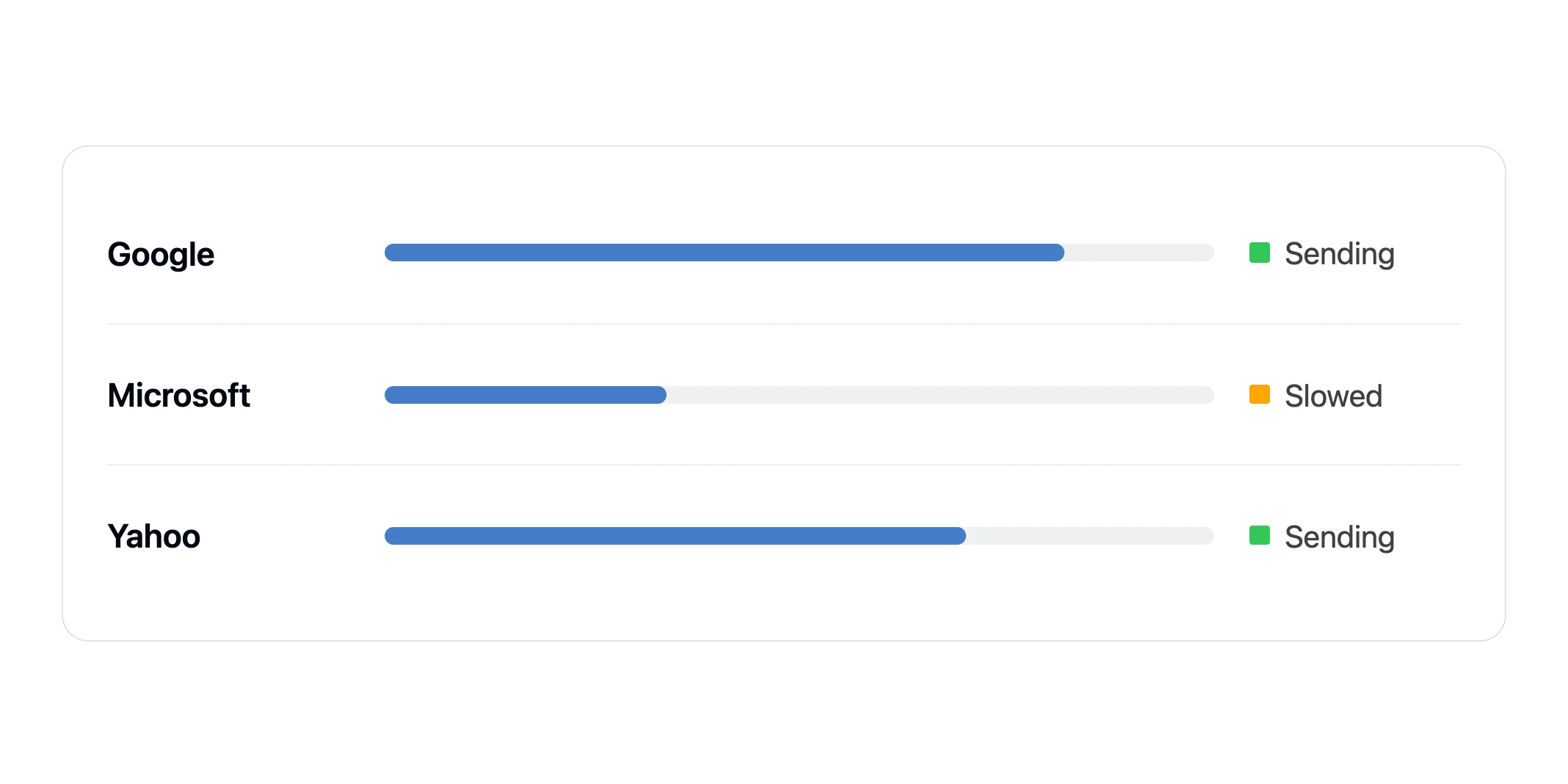
Slow Microsoft without unnecessarily slowing Google.
See where acceptance, throttling, or deferrals are actually happening.
Increase volume where conditions support it instead of forcing every provider to move together.
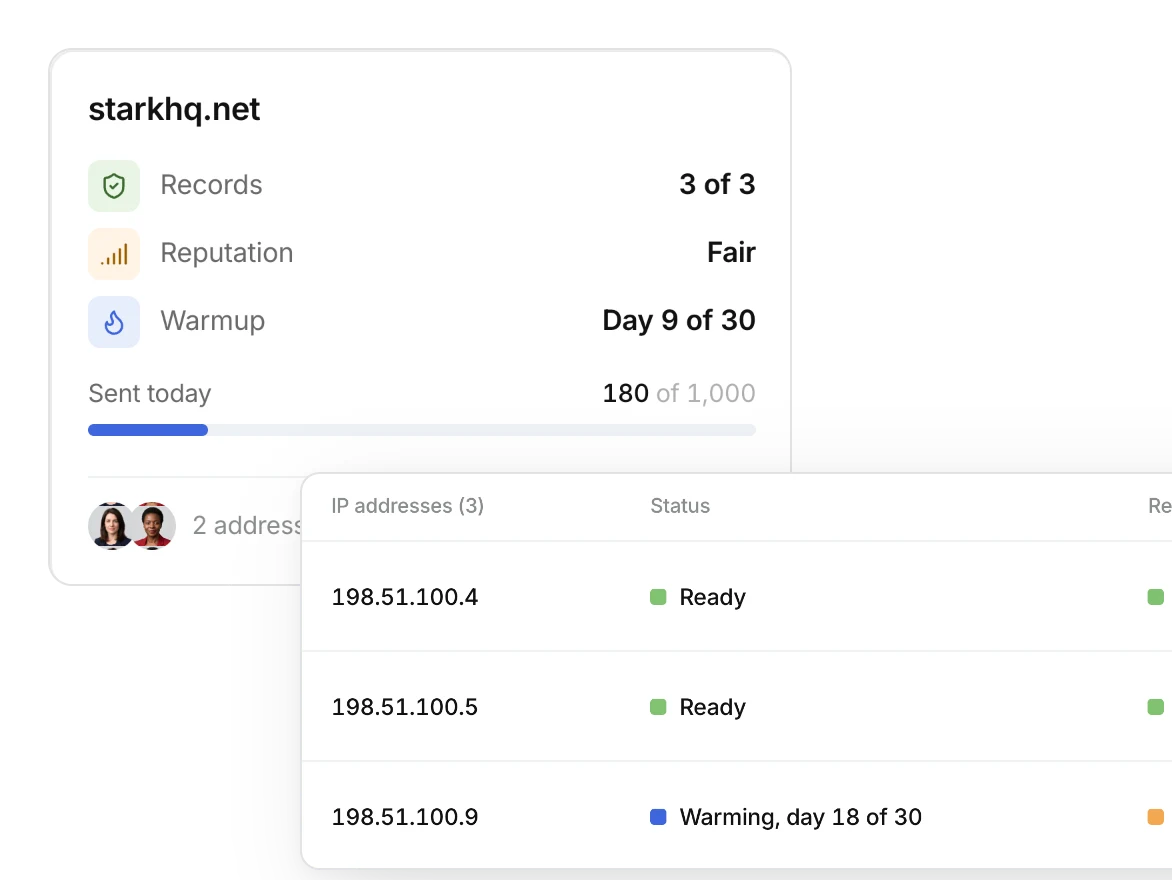
Reach more volume without rushing your reputation.
MailRig increases sending capacity as your domains and infrastructure prove they can handle it, instead of forcing volume because a timer expired.
New infrastructure begins below its intended volume.
Bounces, complaints, authentication, and provider responses influence how fast capacity grows.
If sending health changes, MailRig can hold or reduce volume instead of forcing the ramp forward.
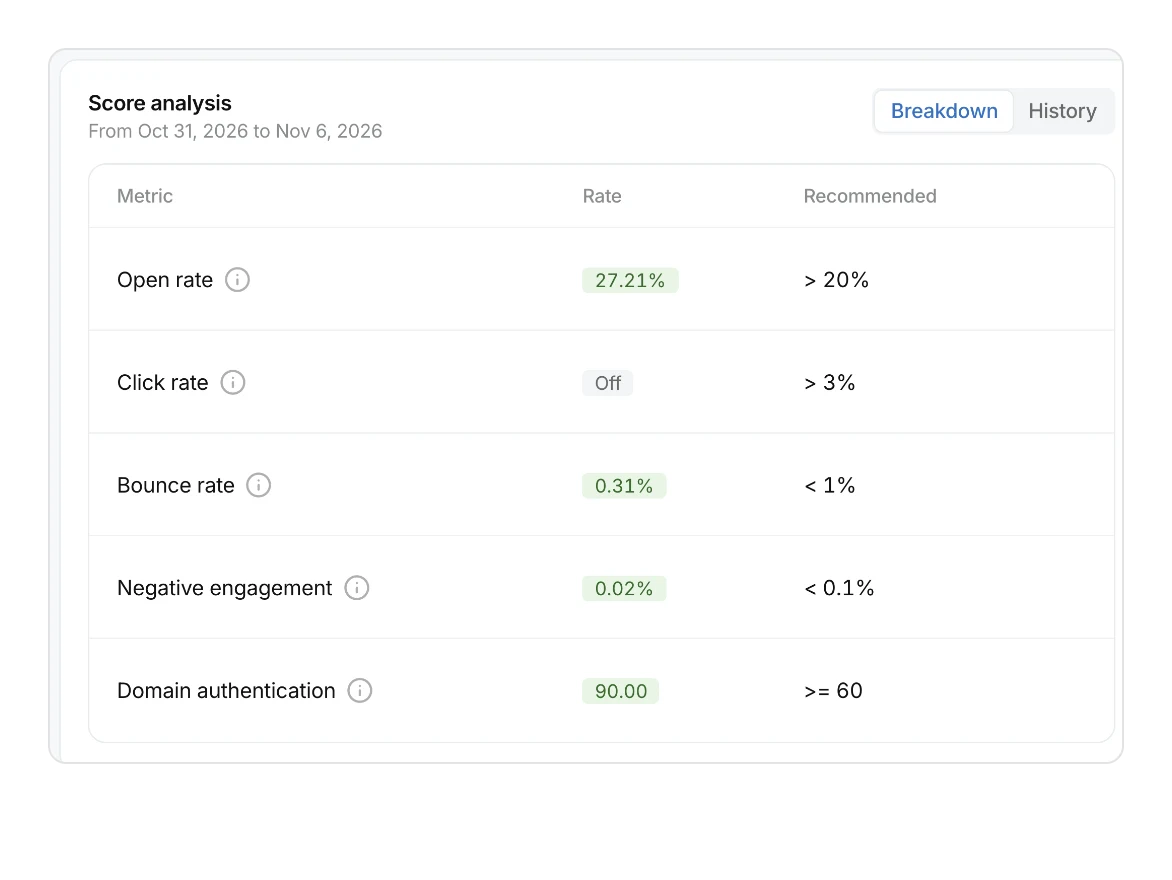
Catch deliverability problems before they spread.
MailRig keeps watching after warmup. When something changes, it can isolate and slow the affected traffic before one problem hurts the rest of your sending.
Frequently
asked questions:
It means your deliverability is yours. No other sender’s mistakes land on your IP, and every clean send builds reputation that only you benefit from. A new IP starts with a ramp while that history builds, and MailRig paces it for you.
Google, Microsoft and Yahoo decide where every message lands, so no provider can promise placement. MailRig controls the infrastructure they judge: authentication, a dedicated IP, pacing per provider, sending health and reputation monitoring.
Most setups ramp over a few weeks. Volume rises as soon as the signals support it: the history of the domain and IP, where your recipients are hosted, list quality and sending consistency.
MailRig can freeze growth, reduce sending to the affected provider, or pause the affected traffic while the cause is investigated.
Volume ramps back up once the cause is fixed.
Sending on the affected infrastructure stops. We diagnose why the listing happened, fix the underlying cause, follow the blocklist’s remediation process where applicable, and reintroduce traffic carefully afterward.
MailRig does not simply rotate to a new IP to avoid the listing.

Still have questions?
Have a question about MailRig, your setup, or switching over? We’re happy to talk it through with you.