Dedicated IP vs Google Workspace for cold email: what actually changes?
Understand the difference between sending through rented mailboxes and building reputation on dedicated infrastructure.

The choice is usually framed as a cost question. It is really a reputation question, and the cost follows from that.
Here is what actually differs between sending through rented mailboxes and sending from infrastructure assigned to you.
Whose reputation are you borrowing?
When you send from a Google Workspace mailbox, the receiving provider sees Google's infrastructure. Google has spent two decades establishing that its outbound is generally trustworthy, and your mail inherits that starting position.
That is genuinely valuable and it is the single strongest argument for the rented model. A new mailbox is not starting from zero, because the IP underneath it is not new.
The catch is that you do not control it and you do not keep it. Reputation built through a rented mailbox belongs to the mailbox. Lose the account, and you start again.
The ceiling is the real difference
A rented mailbox has a practical daily limit well below what the provider's published quota suggests, because cold outreach is judged differently from normal business mail. Most operators settle somewhere between 20 and 50 a day per mailbox.
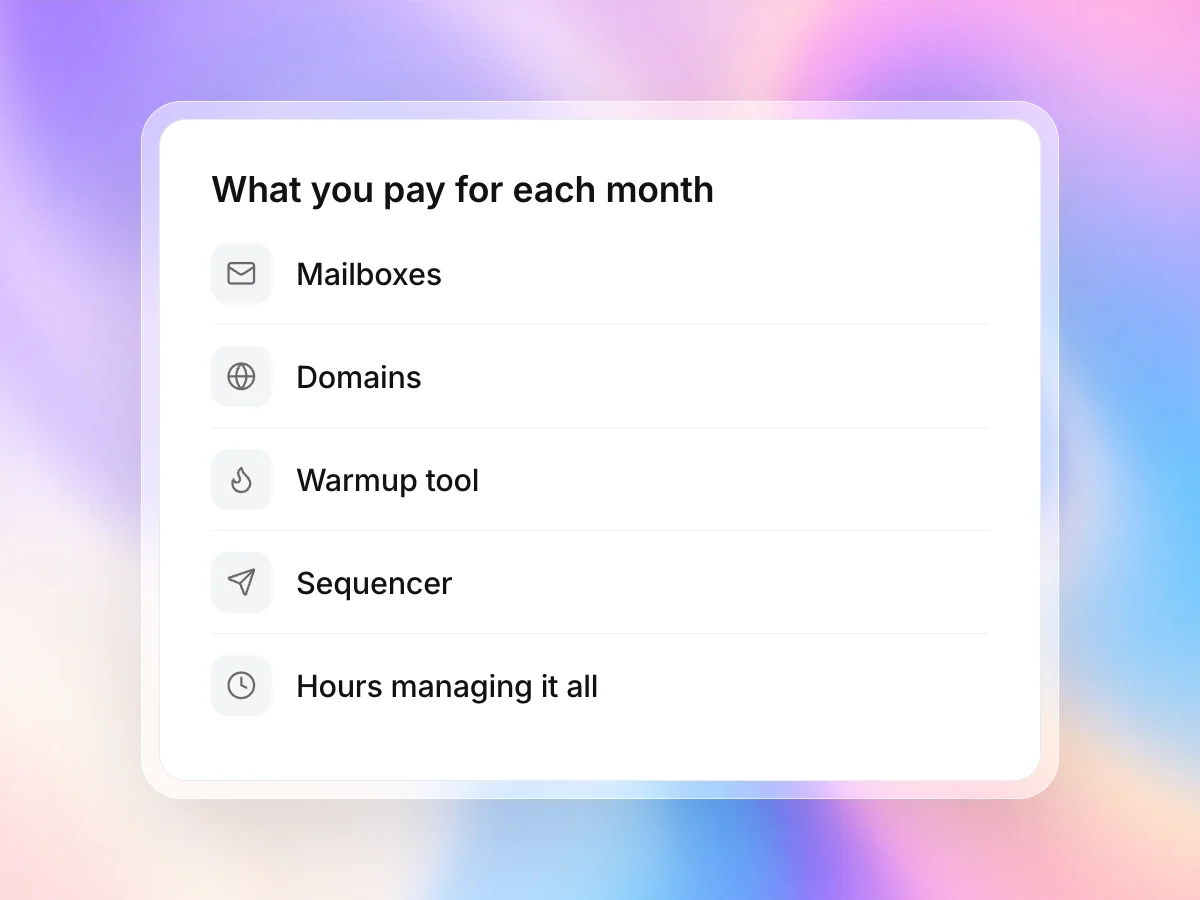
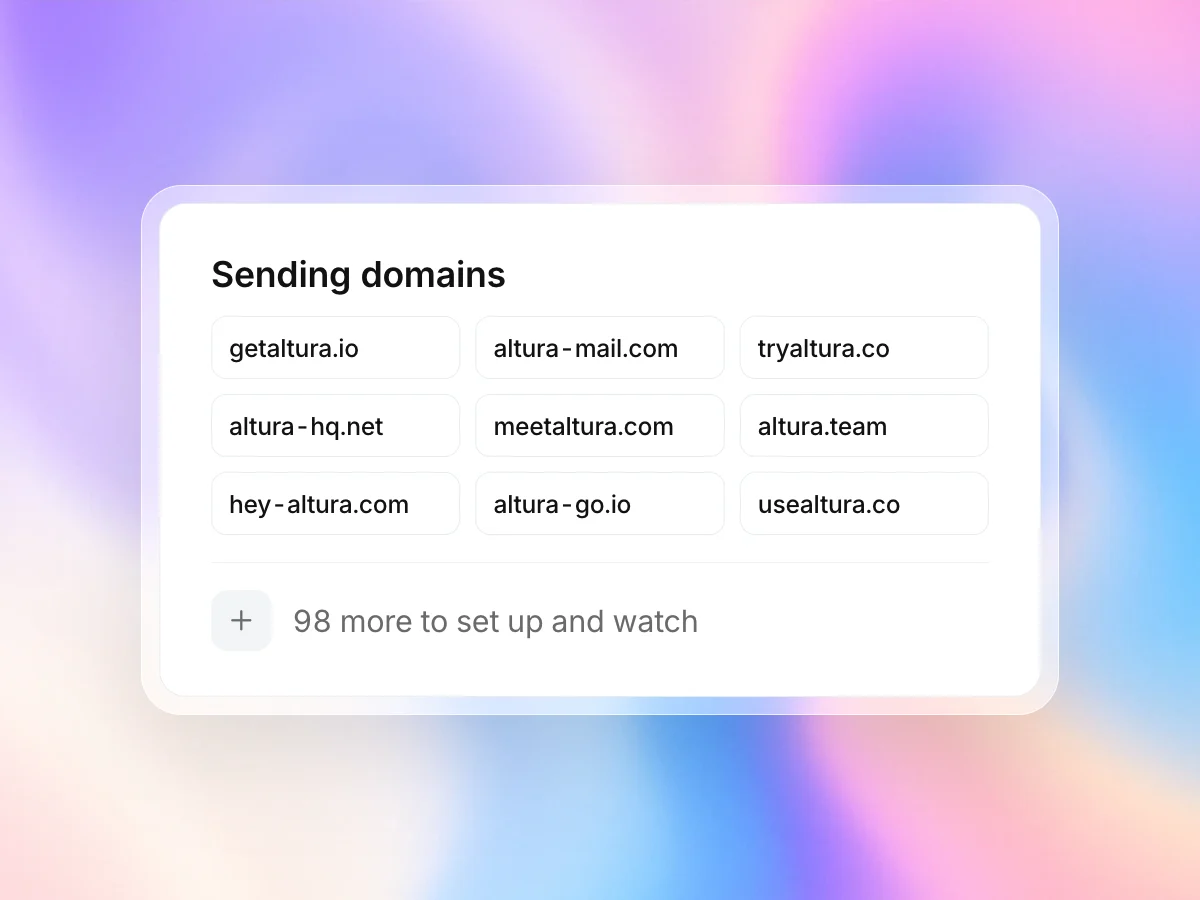
That ceiling does not rise as you prove yourself. It is a property of the model. The only lever is more mailboxes, and more mailboxes means more domains, more DNS, more warmup and more things that quietly stop working.
Dedicated infrastructure has a ceiling too, but it is one that moves. It starts lower, considerably lower, and rises as sending history accumulates.
Isolation cuts both ways
On shared provider infrastructure, you are one sender among many. Mostly that protects you: a single bad day is diluted across enormous volume.
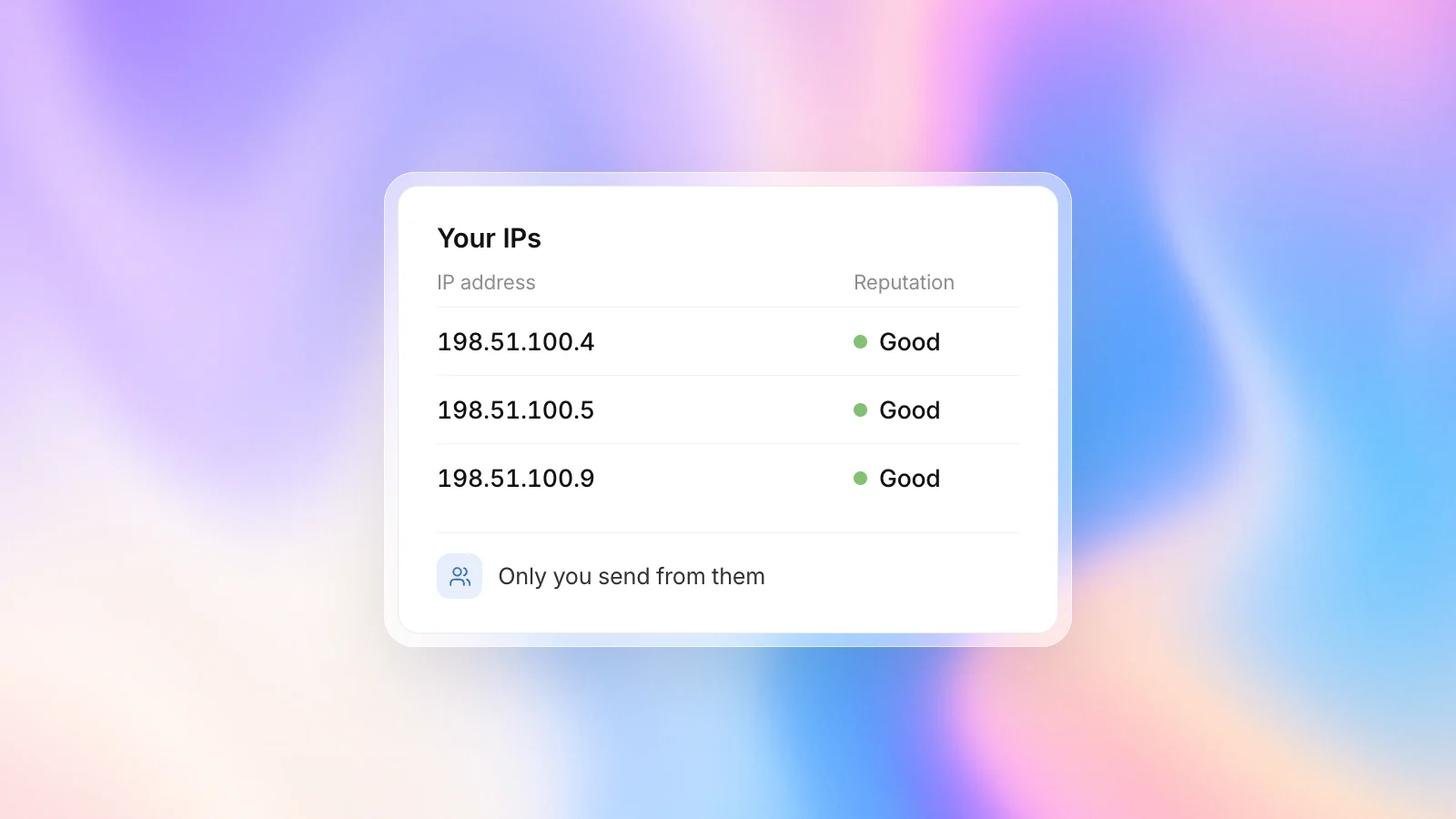
On a dedicated IP, nothing is diluted. Every signal the receiving provider sees is yours. A clean, consistent sending pattern builds a clean reputation faster than it would on shared infrastructure. A bad week is also entirely attributable to you.
If your sending is inconsistent or your list quality varies, isolation works against you. It rewards discipline and punishes improvisation.
The cold start problem
This is the part that gets glossed over in most comparisons. A fresh dedicated IP performs worse than an established rented mailbox, and it stays worse until it has built history.
Receiving providers are suspicious of unfamiliar sending infrastructure by design, because that is what spam looks like from their side. The only cure is time plus consistent, clean volume.
Plan for weeks. Not days, and not a fixed number of days either. The pace depends on domain and IP history, where your recipients are hosted, and how clean your list is.
Microsoft is its own case
Microsoft-hosted recipients behave differently from Google-hosted ones, especially against new infrastructure. Deferrals against Microsoft can persist for weeks regardless of how careful you are being.
This is not a defect in your setup and it is not something a provider can promise away. Microsoft runs its own queue, its own throttling and its own ramp, and it takes longer than Google.
Anyone who tells you their infrastructure gets identical results across Google, Microsoft and Yahoo is describing an outcome they cannot control.
So which one
Rented mailboxes are the right answer when volume is low, when you need placement immediately, and when the number of mailboxes is small enough that managing them is not a job.
Dedicated infrastructure is the right answer when the per-mailbox ceiling has become the thing defining your operation, when you are prepared to spend weeks earning capacity, and when you would rather own the reputation you are building.
Neither answer is a deliverability guarantee. There is no such thing. The receiving provider decides, every time.


Send 10,000 cold emails a day without renting a single inbox.
Your own dedicated IPs on isolated sending infrastructure, provisioned and warmed for you. One flat price.