How to send 300,000 cold emails a month without managing an inbox farm
A practical breakdown of the infrastructure, costs, domains, sending capacity, and tradeoffs behind high-volume cold email.
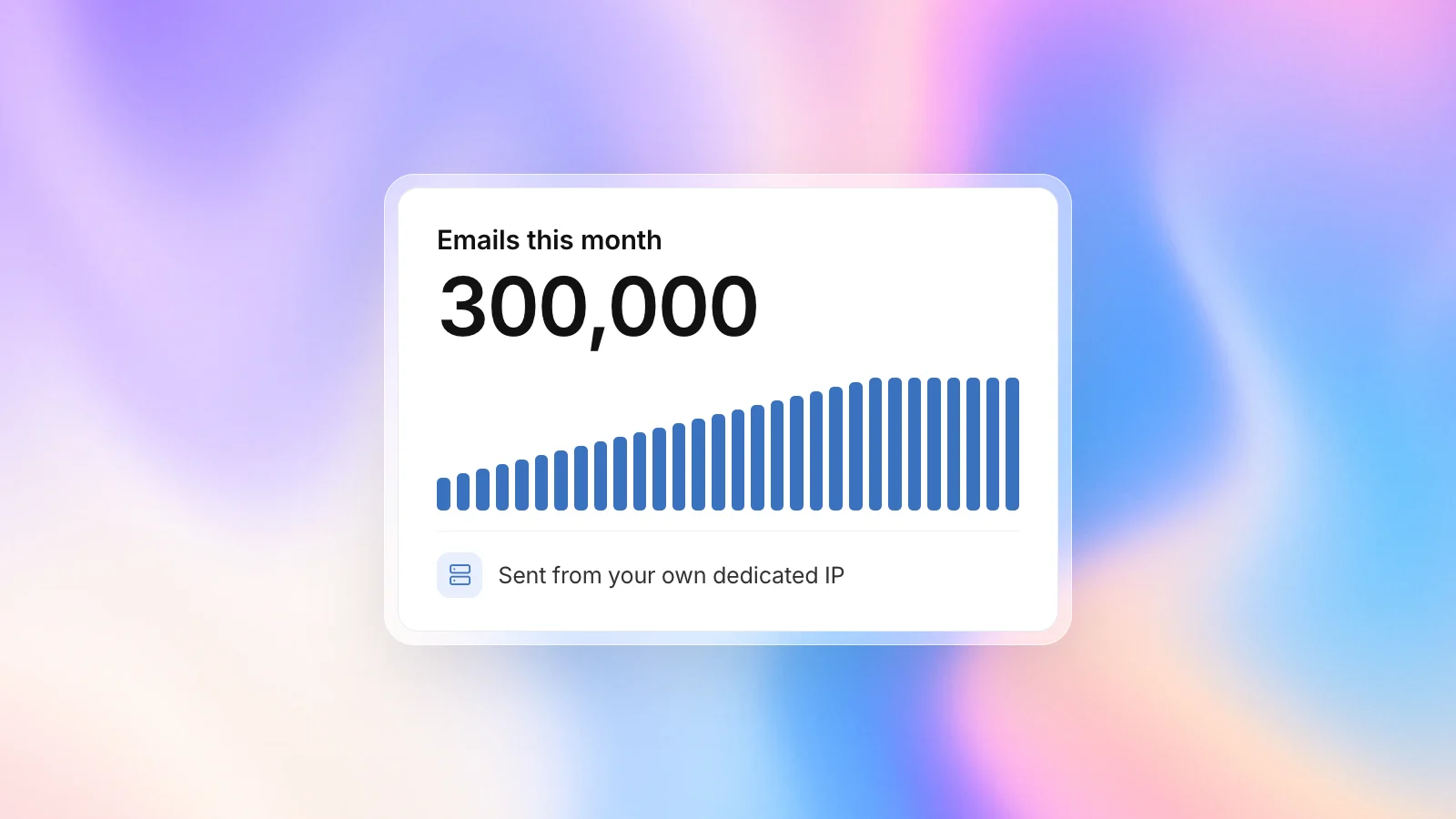

Three hundred thousand emails a month is about ten thousand a day. Most teams reach that number by buying mailboxes, hundreds of them, and then spend the rest of their time keeping those mailboxes alive.
There is another way to arrange it, and the tradeoffs are real in both directions. This is the arithmetic, the failure modes, and the honest case for each.
The mailbox math
Start from the constraint everyone actually hits. A cold-outreach mailbox on Google Workspace or Microsoft 365 is generally run at somewhere between 20 and 50 sends a day. Push past that and you are not doing clever growth hacking, you are shortening the life of the mailbox.
So take the middle of that range. Thirty sends a day, ten thousand a day in total:
- 10,000 ÷ 30 = roughly 333 mailboxes sending every day
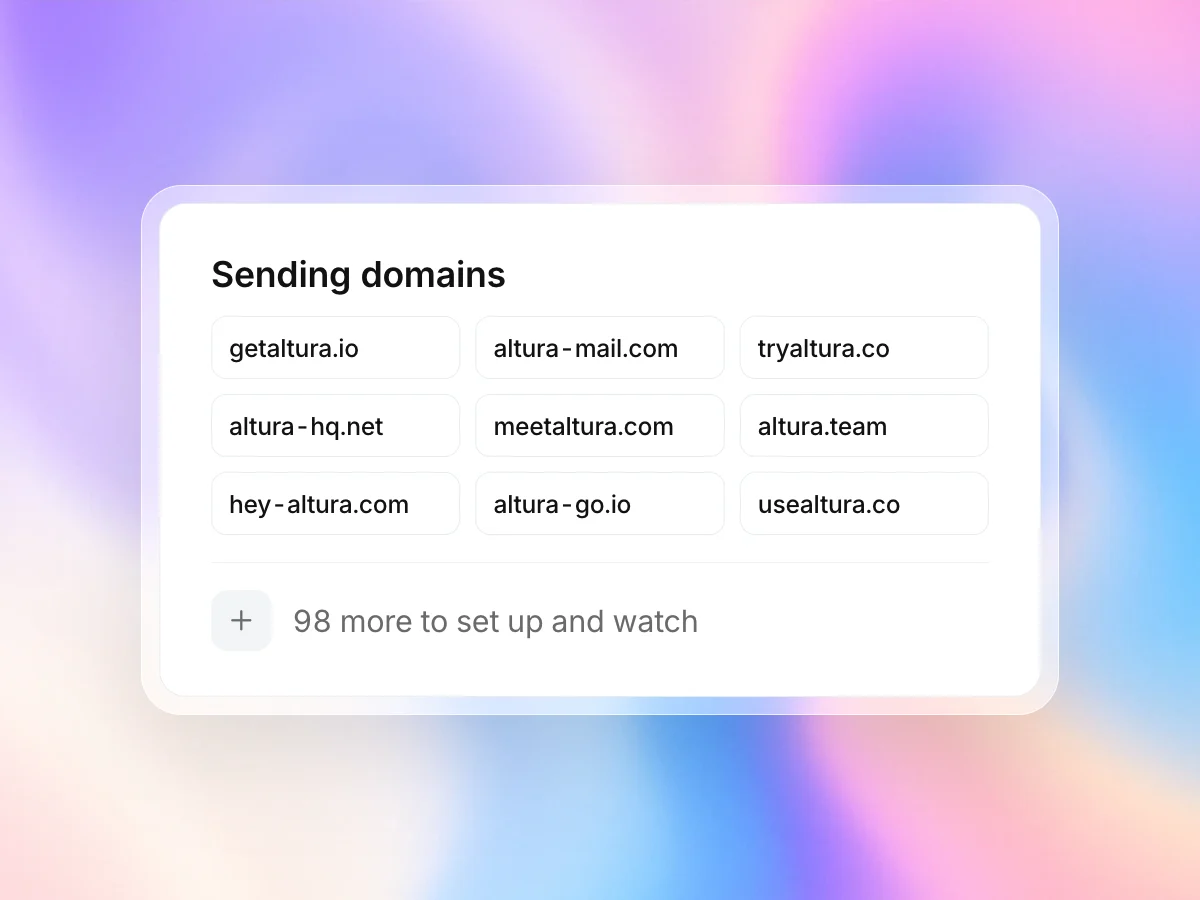
- At three to five mailboxes per domain, that is 70 to 110 domains
- Each domain needs SPF, DKIM, DMARC and a redirect configured before it sends anything
That is the whole problem in three lines. Nobody sets out to run a hundred domains. It is what the per-mailbox ceiling produces once you multiply it out.
What that actually costs
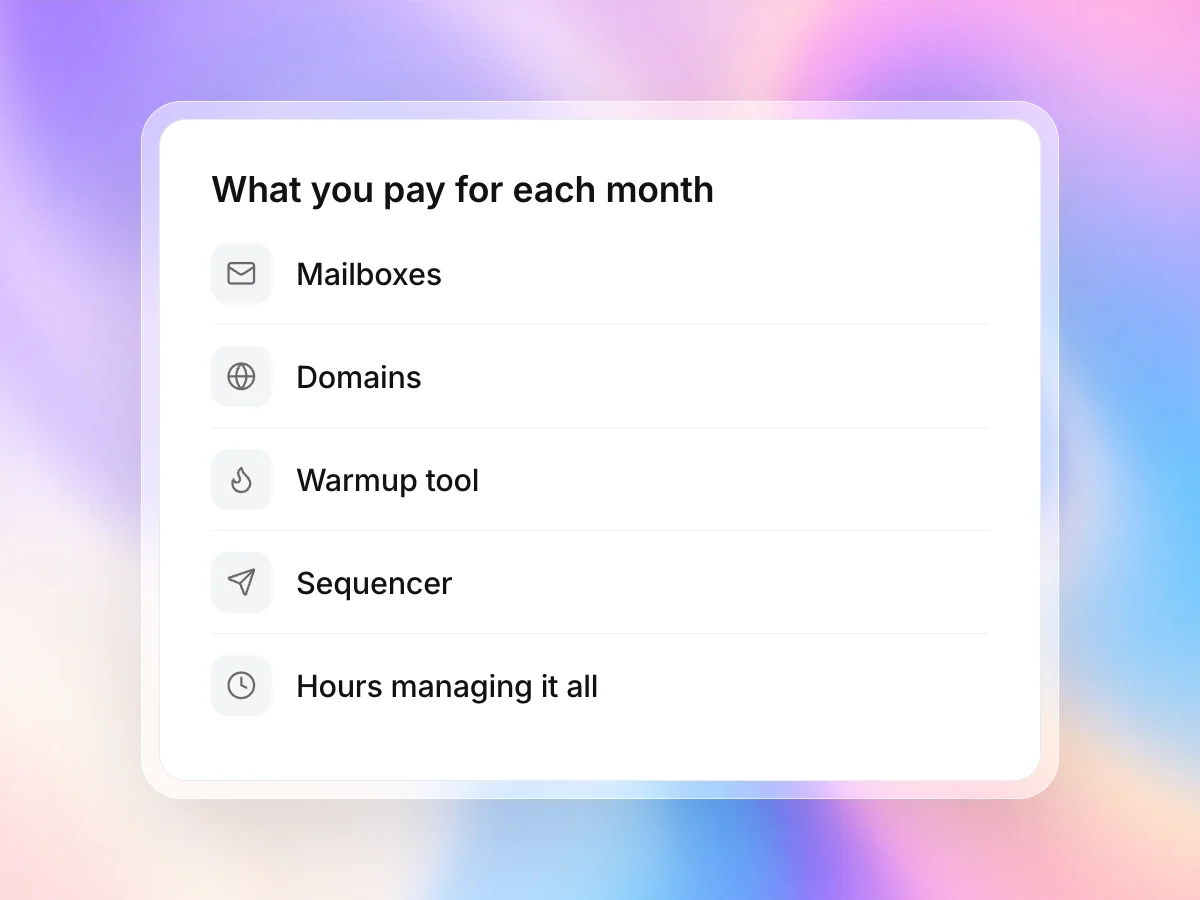
Add up the pieces rather than the headline price. A 333-mailbox operation is paying for seats, domains, a sequencer priced per inbox or per contact, warmup tooling, verification credits, and replacements for whatever burns.
Run your own numbers on it. Seat prices and sequencer tiers change, and any figure written into an article ages badly. The useful exercise is to list every line item you pay for monthly and divide by sends actually delivered. Most teams have never done that calculation and are surprised by it.
The part that does not show up on any invoice is the hours. Someone is buying domains, configuring DNS, running warmup, watching which mailboxes have gone quiet, and rotating the dead ones out. That job does not end.
Why the farm model exists at all
It is worth being fair to it, because it is not stupid. Rented mailboxes on Google and Microsoft come with reputation you did not have to build. Those providers are trusted by default. A brand-new mailbox on an established provider will place mail on day one in a way that brand-new dedicated infrastructure simply will not.
For someone sending a few thousand a month, that is the right trade. You get placement immediately, you pay for it per seat, and the management overhead is small because the number of mailboxes is small.
The model stops making sense on volume, not on principle. It is a fixed per-mailbox ceiling, so the only way to scale is to multiply mailboxes, and every mailbox you add is another thing to configure, warm, monitor and eventually replace.
The dedicated alternative
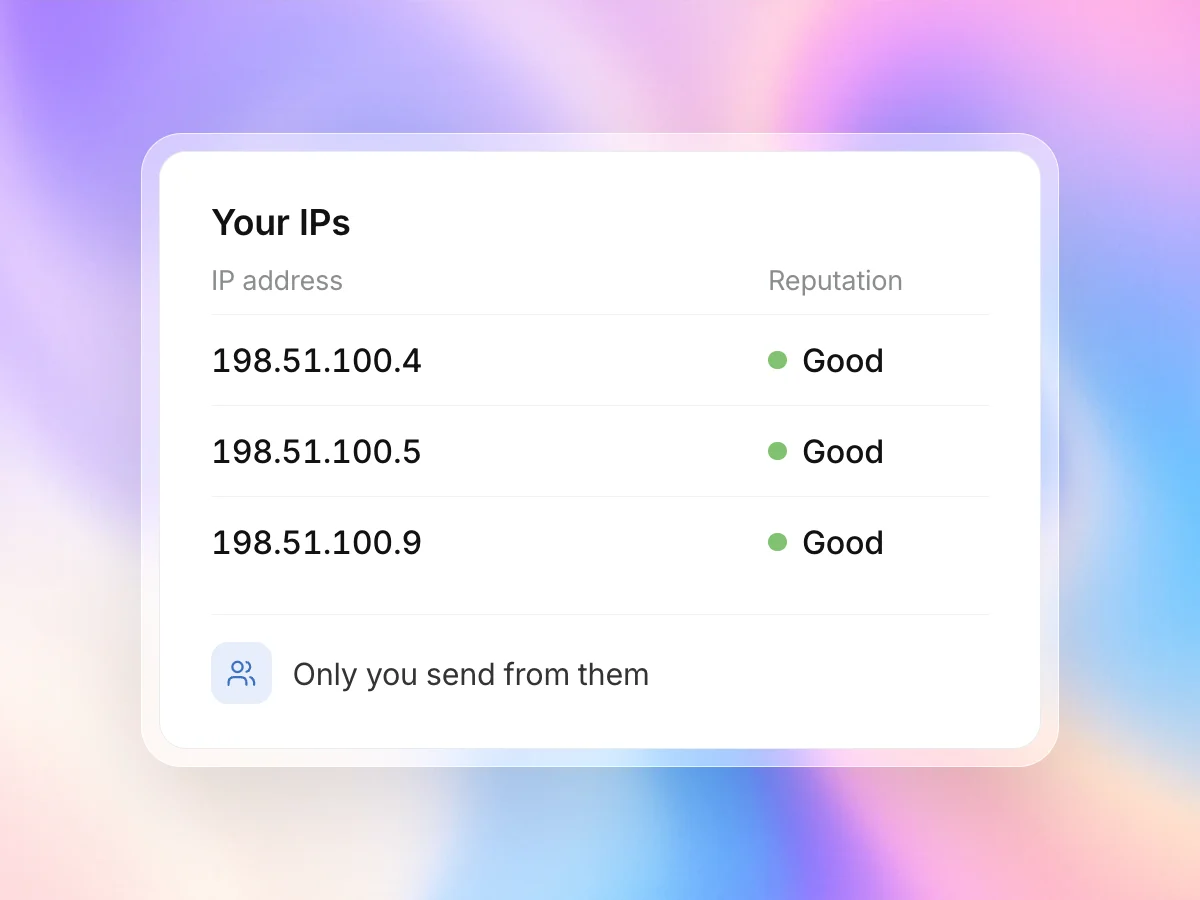
The other arrangement is to run outbound through a mail server on IPs assigned to you, with your own sending domains authenticated against it. Volume is then governed by the reputation of that infrastructure rather than by a per-mailbox cap multiplied a few hundred times.
A new dedicated IP starts without history, so the first weeks are a ramp: volume rises as the IP and domains earn reputation.
A dedicated IP gives you control over your reputation. It also makes you responsible for it. Those are the same sentence.
What you get in exchange is isolation and a ceiling that rises as the infrastructure proves itself, rather than a ceiling you can only raise by buying more seats.
The ramp is the whole story
Any high-volume setup, rented or dedicated, has to start small and increase gradually. The difference is what the increase is gated on.
Done properly, volume goes up when the signals support it: acceptance rates holding, hard bounces low, complaints low, deferrals not climbing, no blocklist activity. It does not go up because a certain number of days have elapsed. A calendar-based ramp is a guess dressed up as a process.
Practically, this means you should not plan a campaign launch around hitting full volume on a specific date. Plan to overlap: keep the existing setup running while the new infrastructure earns its capacity, and move traffic across as it does.
What infrastructure does not fix
Two things stay your problem no matter how the sending is arranged.
The first is the list. Invalid addresses produce hard bounces, and hard bounces damage reputation faster than almost anything else you can do. Irrelevant targeting produces complaints, which are worse. No infrastructure rescues a bad list. It gives the bad list a cleaner surface to damage.
The second is the message. Recipients who mark mail as spam are making a judgement about the content, not the transport. If the offer is wrong for the audience, better infrastructure delivers the wrong offer more reliably and the complaint rate reflects it.
How to decide
A reasonable rule of thumb, stated as opinion rather than fact: below about 30,000 sends a month, the farm model is probably still the cheaper and simpler answer, and a per-inbox sequencer is genuinely a better fit.
Above that, the management overhead starts to dominate and the per-mailbox ceiling becomes the thing shaping your operation. That is the point where dedicated infrastructure starts to pay for the ramp it costs you.
If you are somewhere in the middle, the question worth asking is not what it costs. It is how many hours a week someone on your team spends keeping mailboxes alive, and what else they would be doing instead.


Send 10,000 cold emails a day without renting a single inbox.
Your own dedicated IPs on isolated sending infrastructure, provisioned and warmed for you. One flat price.