The real cost of running a cold email inbox farm
Mailboxes, domains, sequencers, warmup, replacements, and management all add up. Here’s how to calculate the full cost.

Most teams know the seat price and stop there. The seat price is the smallest line.
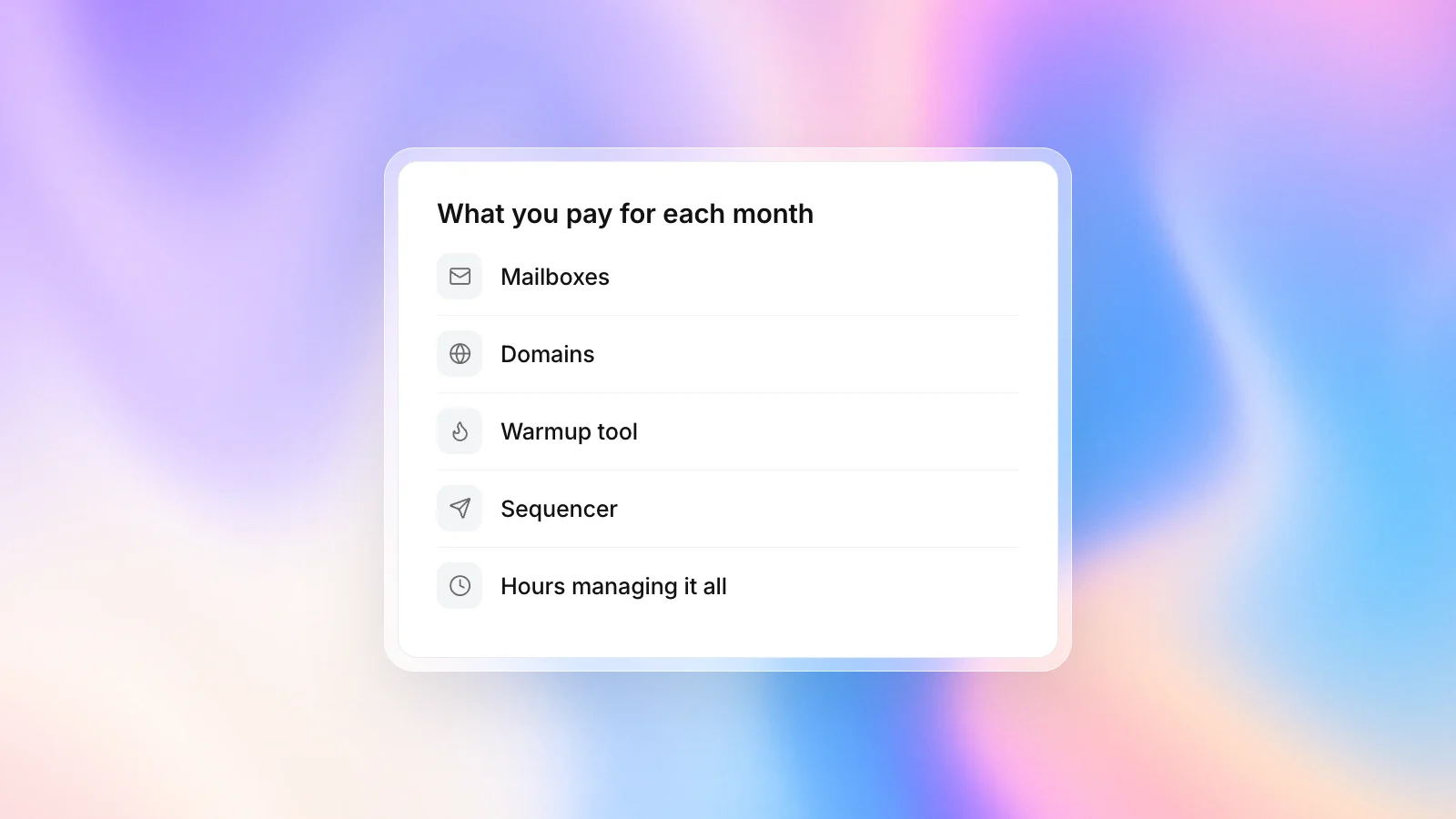
Here is the full list of what a farm costs, including the parts that never appear on an invoice.
The line items
Write these down for your own setup rather than trusting a number in an article. Seat prices and sequencer tiers change often enough that any figure printed here would be wrong within a year.
- Mailbox seats, multiplied by several hundred
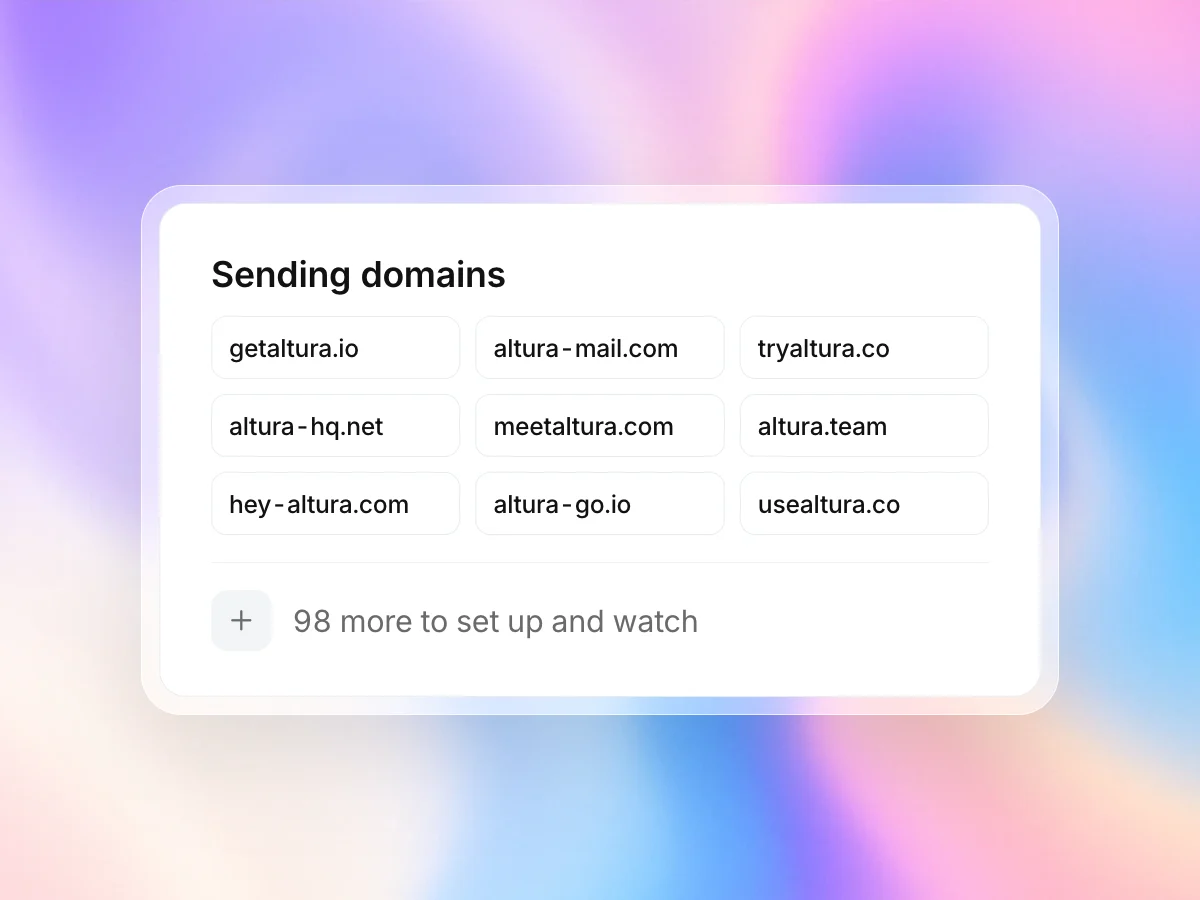
- Domain registrations, renewed annually, at 70 to 110 of them
- A sequencer, usually priced per inbox connected or per contact stored
- Warmup tooling, often priced per mailbox
- Email verification credits, priced per address checked
- Replacement mailboxes for whatever burns out this month
Divide the total by emails actually delivered, not emails attempted. Most teams have never run that division and find the result uncomfortable.
The line item that is a person
Someone buys the domains. Someone configures SPF, DKIM and DMARC on each one. Someone runs warmup schedules, watches which mailboxes have gone quiet, works out whether a drop is the mailbox or the campaign, and rotates dead ones out.
At a hundred domains that is not a task, it is a role. Price it at whatever an hour of your team's time is worth and add it to the total, because it is the largest cost in most farm operations and the one nobody puts on the spreadsheet.
Churn is a recurring cost, not an incident
Mailboxes degrade under cold-outreach load. Whatever proportion of your fleet needs replacing each month, that replacement carries three costs: the new seat, the setup time, and the warmup period during which the mailbox produces nothing.
The third one is easy to miss. A mailbox in warmup is a seat you are paying for that is not sending campaign volume.
The cost of the ceiling
The last cost is the one you cannot invoice: the campaigns you did not run because provisioning another fifty mailboxes was too much work this quarter.
A model where growth requires linear manual effort quietly caps your outbound at whatever your team can be bothered to maintain. That cap is usually well below what the market would have supported.
Comparing fairly
If you are weighing this against dedicated infrastructure, compare honestly in both directions.
The farm's advantage is real: borrowed provider reputation, placement from day one, no ramp. Dedicated infrastructure costs you weeks of reduced capacity before it performs, and that is a genuine expense, not a formality.
The comparison that matters is total monthly cost per delivered email, including the hours, set against how much of your team's attention each model consumes.


Send 10,000 cold emails a day without renting a single inbox.
Your own dedicated IPs on isolated sending infrastructure, provisioned and warmed for you. One flat price.