SPF, DKIM, DMARC, and rDNS: what cold email senders actually need to know
A practical explanation of the authentication behind a properly configured sending setup.
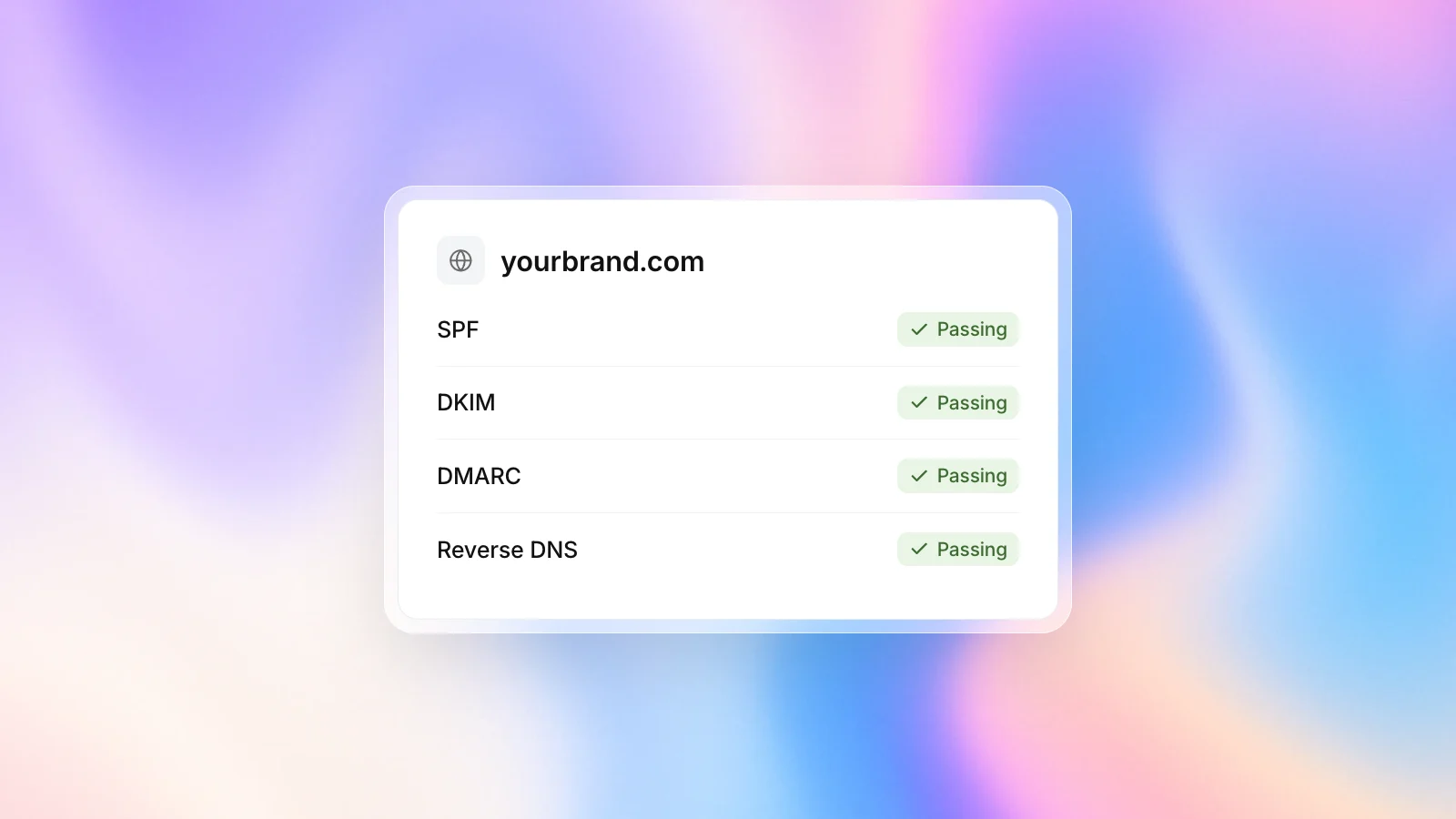

Four acronyms, one job: letting a receiving server confirm that your mail is what it claims to be.
None of them make mail land in the inbox. All of them make it easy to reject if they are wrong.
SPF: who is allowed to send
SPF is a DNS record listing which servers may send mail for your domain. The receiving server compares the sending server against that list.
Two failure modes are common. The first is a record that does not include the infrastructure you actually send from, which fails outright. The second is a record that has accumulated so many includes over the years that it exceeds the lookup limit and fails for a reason nobody can see by reading it.
DKIM: proving nothing changed
DKIM signs your outgoing mail with a private key and publishes the matching public key in DNS. The receiving server verifies the signature, which proves both that the message came from you and that it was not altered in transit.
The usual failure is partial deployment: a key rotated on some domains and not others, or a domain added to the fleet without a key ever being published for it. The result is one domain quietly authenticating worse than the rest.
DMARC: what to do when the first two disagree
DMARC ties SPF and DKIM to the domain a human actually sees in the From line, and tells receiving servers what you want done when the check fails. It also asks them to send you reports.
Those reports are the point. A policy of none with reporting turned on gives you visibility into who is sending as your domain before you enforce anything. Enforcing without first reading the reports is how teams accidentally block their own legitimate mail.
Reverse DNS: the IP's side of the story
Reverse DNS maps the sending IP back to a hostname. Receiving servers check it, and an IP with missing or generic reverse DNS looks like a machine that should not be sending mail directly.
This one only applies if you are sending from your own infrastructure. On a rented mailbox the provider owns the IP and handles it.
What passing all four actually buys
Permission to be evaluated on your merits. That is the whole return.
Authentication is necessary and not sufficient. Perfectly authenticated mail to a bad list still earns complaints, and complaints outweigh a clean SPF record.
Think of it as the floor. Get it right, verify it continuously rather than once at setup, and then spend your attention on list quality and pacing, which is where placement is actually won or lost.


Send 10,000 cold emails a day without renting a single inbox.
Your own dedicated IPs on isolated sending infrastructure, provisioned and warmed for you. One flat price.