Why your cold email deliverability drops as you scale
More volume exposes problems that small campaigns can hide. Here’s what starts breaking and what to watch.

Campaigns that worked at two thousand a month often stop working at twenty thousand. The usual assumption is that something broke.
Usually nothing broke. Volume exposed problems that low volume was hiding.
Small numbers hide everything
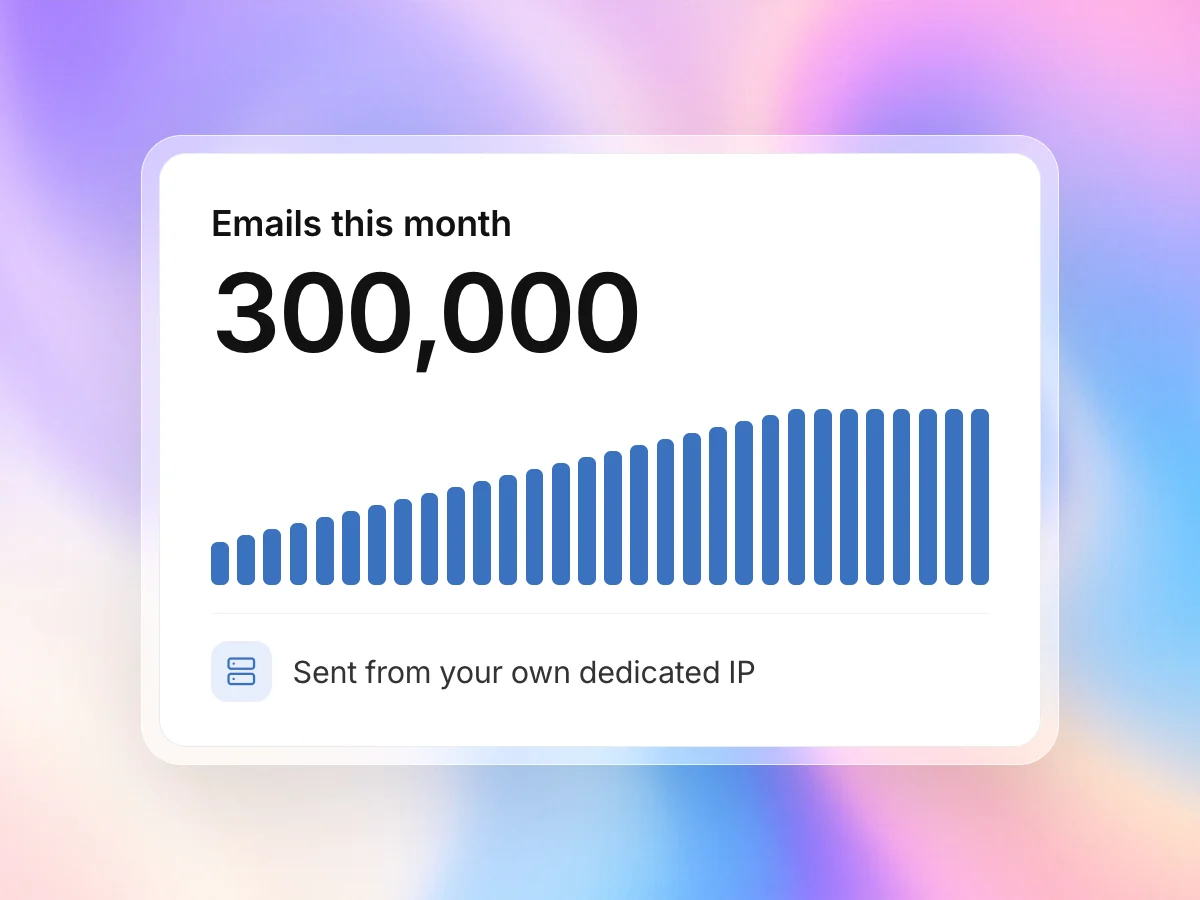
At a thousand sends a month, a two percent invalid rate is twenty bounces. Nobody notices twenty bounces. At fifty thousand sends, the same list quality produces a thousand, and a thousand hard bounces is a reputation event.
The list did not get worse. The multiplier got bigger. This is the single most common cause of the thing people describe as deliverability suddenly dropping.
The same arithmetic applies to complaints. A complaint rate that was invisible becomes the number a receiving provider is making decisions about.
Concentration starts to matter
At low volume your sending is naturally spread out. At high volume it concentrates in ways that look mechanical from the receiving side.
Three patterns in particular attract attention:
- Many messages to the same organisation in a short window
- The entire daily volume delivered in a narrow burst rather than paced across a window
- Volume concentrated through a small number of sending identities
Each of these is fine in small doses and conspicuous at scale.
Your provider mix changes
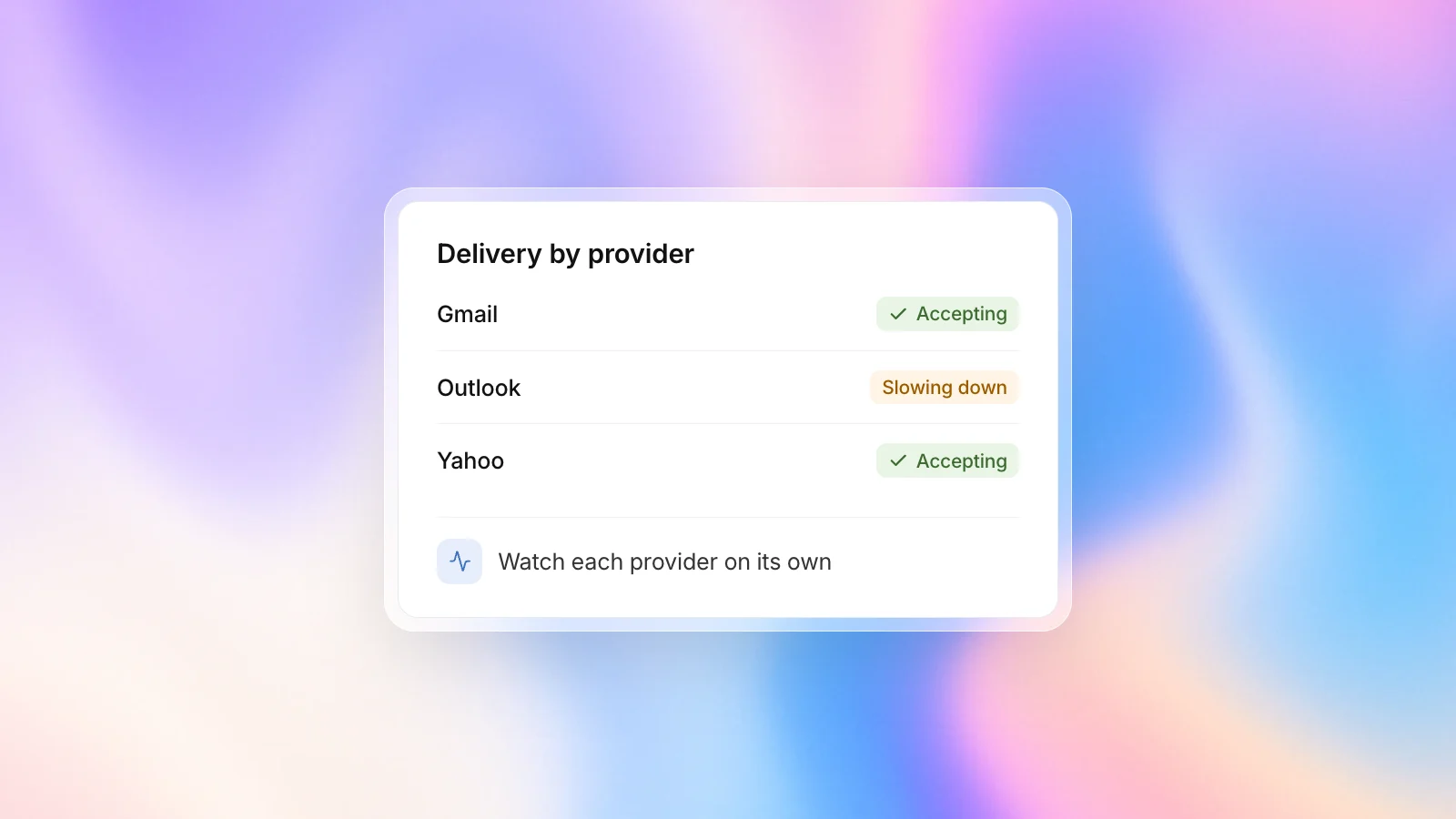
A small list is often accidentally homogeneous. A large one is not. As you scale you start hitting Microsoft-hosted recipients in numbers, and Microsoft does not behave like Google.
If your reporting lumps all recipients into one pool, this shows up as a mysterious overall decline. Split by receiving provider and it usually resolves into one provider deferring while the others are fine.
That distinction matters because the response is different. Blindly changing how you send to everyone because Microsoft is deferring will damage the traffic that was working.
Authentication drifts
At three domains, DNS is something you set up once. At seventy, it is an inventory that decays.
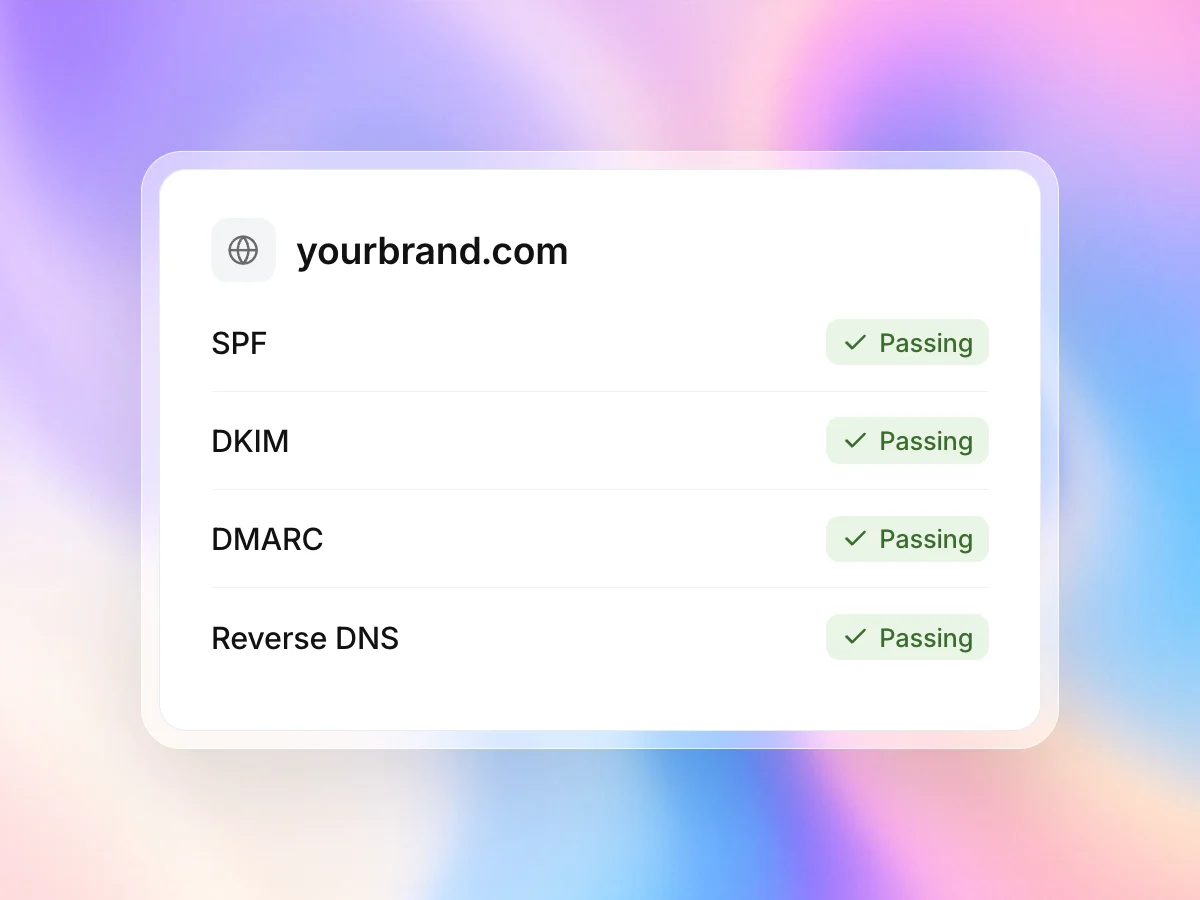
Records get edited, registrars expire, a DKIM key gets rotated somewhere and not everywhere, a DMARC policy sits at none and nobody revisits it. Any one of these produces a domain that quietly authenticates worse than its neighbours.
The fix is not cleverness, it is re-checking. Authentication should be verified continuously rather than confirmed once at setup.
What to do when it starts
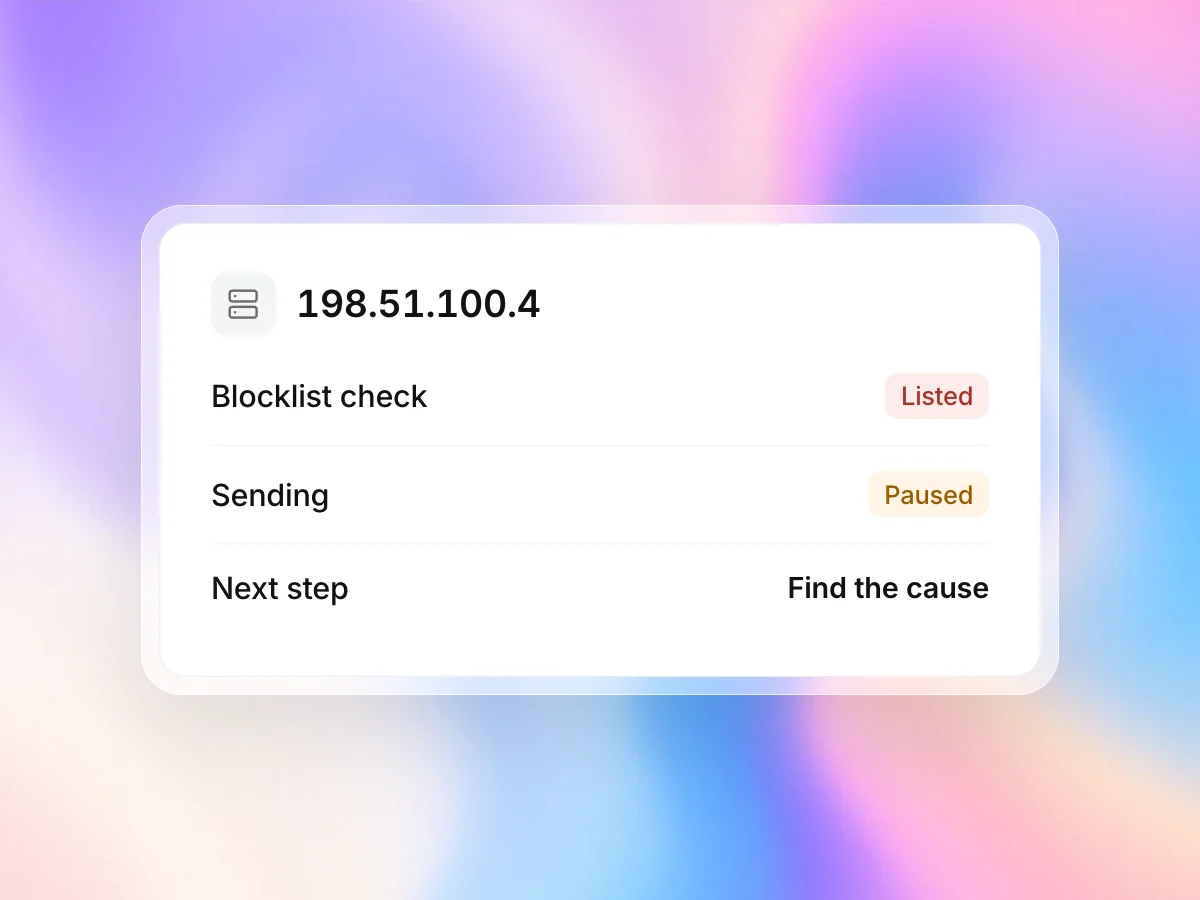
The instinct is to move: new domains, new IPs, a different provider. That instinct is usually wrong, because it throws away whatever reputation you had built and hides the cause.
A better order of operations:
- Stop growing volume before you try to fix anything
- Split your numbers by receiving provider, then by domain, then by campaign
- Look at hard bounces first, complaints second, deferrals third
- Reduce sending on whatever is producing the bad signal rather than everything
- Only restore volume once the signal has been clean for a while
Rotating to fresh infrastructure whenever performance dips is the most expensive habit in cold email. It resets your reputation and leaves the actual cause in place, ready to do it again.


Send 10,000 cold emails a day without renting a single inbox.
Your own dedicated IPs on isolated sending infrastructure, provisioned and warmed for you. One flat price.