What happens when a cold email IP gets blocklisted?
What a blocklisting means, what not to do, and how a sending operation should respond.
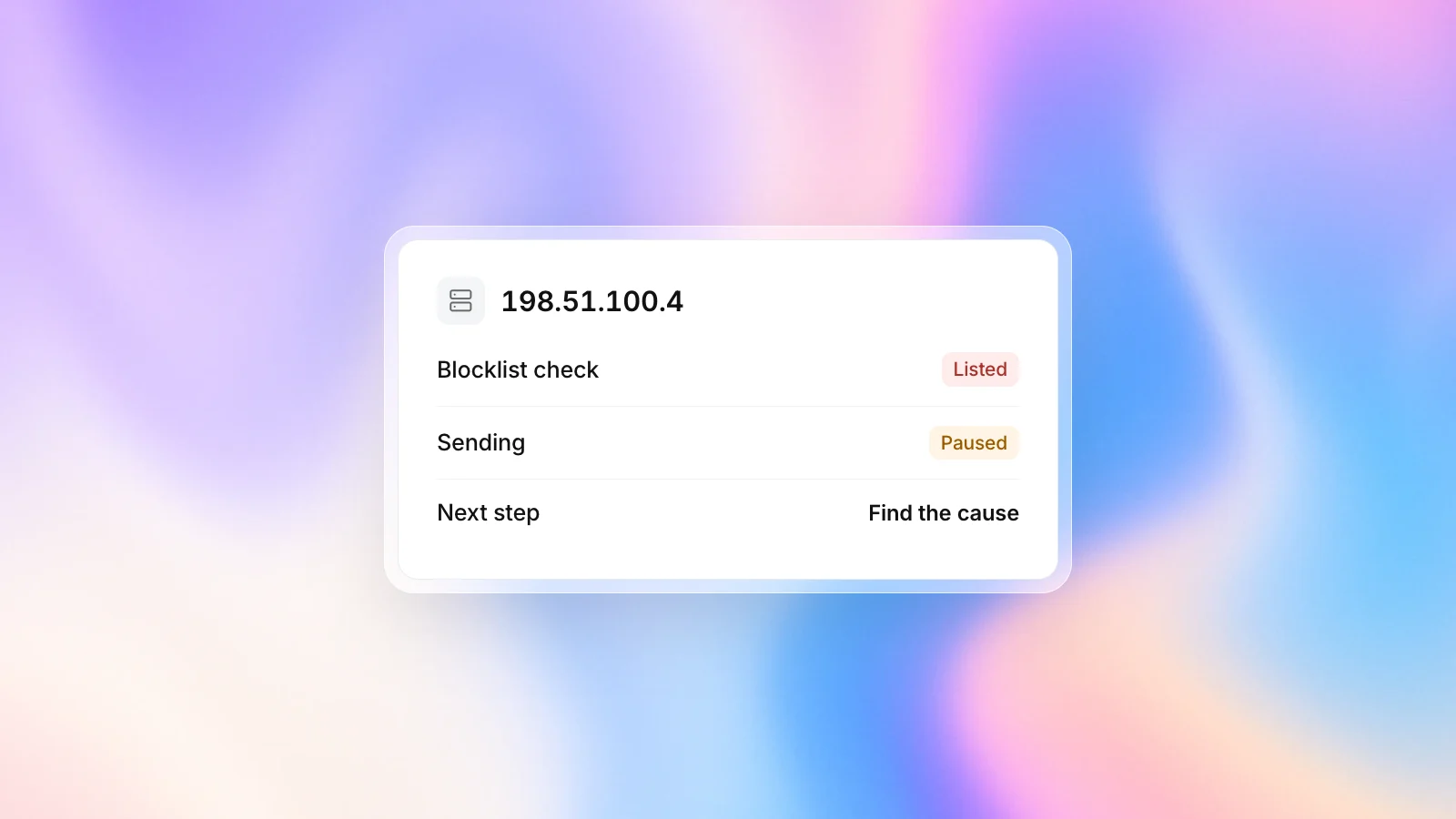

A blocklisting is a signal, not a verdict. What you do in the first hour determines whether it is a bad week or a lost sending identity.
The instinct, moving to a fresh IP, is the single most expensive response available.
What a listing actually is
A blocklist is a third party publishing an opinion that mail from a given IP or domain should be viewed with suspicion. Receiving providers consult some of them, weight them differently, and make their own decisions.
This matters because not all listings are equal. Some are consulted widely and will visibly affect delivery. Others are consulted by almost nobody and will not. Establish which one you are on before you react to it.
The first response is to stop
Sending on the affected infrastructure should stop. Continuing to push volume through a listed IP adds evidence to the case against it and makes delisting harder to argue for.
Stopping is not the same as moving. Stopping preserves the option to fix the cause and recover the reputation. Moving forfeits it.
Find the cause before anything else
Listings almost always trace back to something identifiable. In rough order of likelihood:
- A list segment with a high proportion of invalid addresses, producing hard bounces
- A campaign generating complaints at a rate above what receivers tolerate
- Mail hitting spam traps, which usually means the list contains scraped or very old addresses
- A sudden volume increase that did not match the infrastructure's established pattern
- An authentication problem that made legitimate mail look forged
If you delist without finding which of these it was, you will be listed again, and the second listing is harder to clear than the first.
Delisting properly
Most reputable blocklists publish a removal process. Follow it, and be straightforward about what happened and what you changed. Operators of these lists deal with evasion constantly and respond well to specifics.
Some listings expire on their own once the behaviour stops. Some require a request. A few require you to demonstrate a fix. Read the specific list's policy rather than assuming.
Coming back
Delisting is not the end. The reputation damage that caused the listing is still in the receiving providers' records, and they do not clear it because a third party cleared theirs.
Resume at a fraction of previous volume and increase only while bounce, complaint and deferral signals stay clean. Returning straight to full volume is how a recovered IP becomes a listed IP again.
Why not just move
Because rotating to fresh infrastructure discards every bit of reputation you built and leaves the actual cause untouched.
Rotating away from a listing is also a pattern receiving providers recognise. It is what senders who cannot fix their behaviour do, and being recognisable as that sender is worse than the original listing.
The only situation where replacing infrastructure is right is when the underlying resource is genuinely unusable. Even then the new infrastructure has to ramp from nothing, so it is a last resort rather than a first move.


Send 10,000 cold emails a day without renting a single inbox.
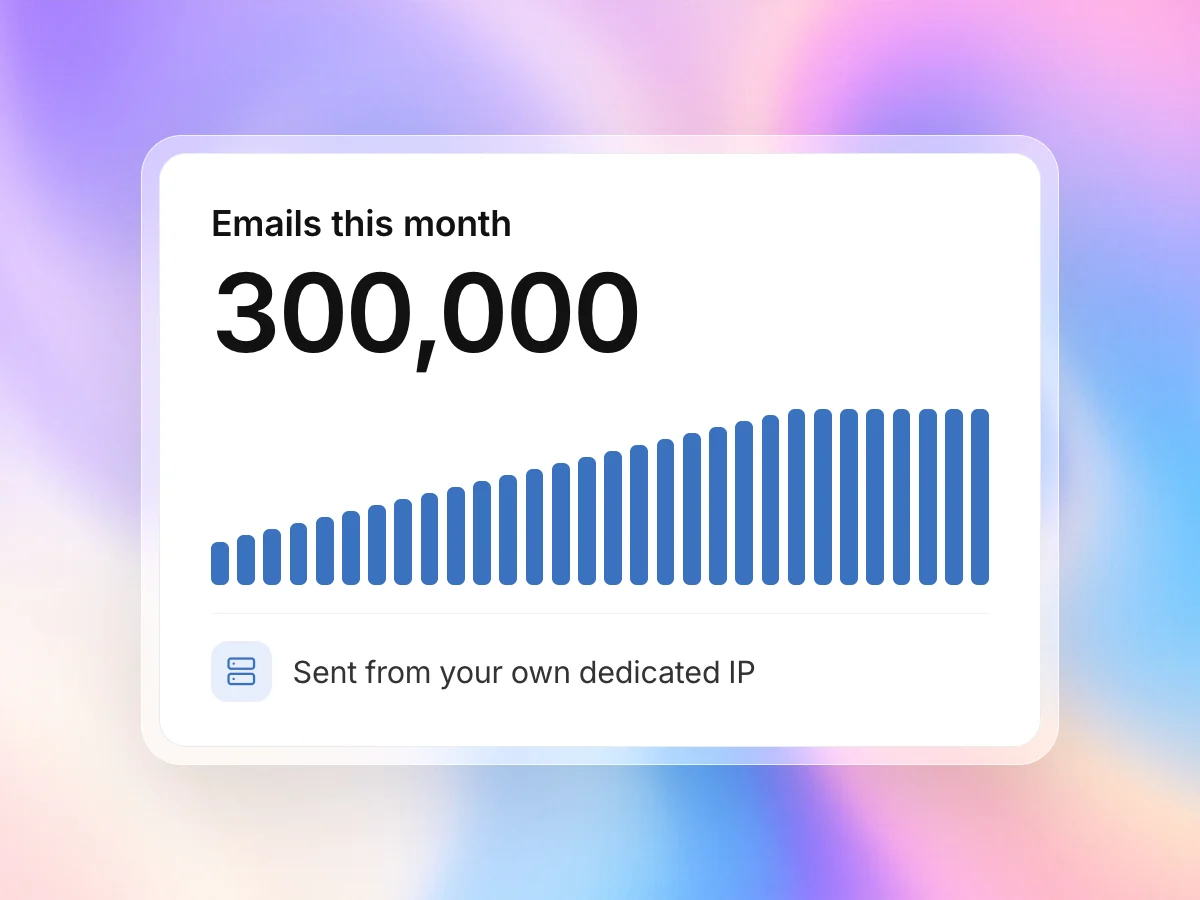
Your own dedicated IPs on isolated sending infrastructure, provisioned and warmed for you. One flat price.