What MailRig replaces in a traditional cold email stack
Mailboxes, sequencing, warmup, monitoring, and sending infrastructure, and what you still bring yourself.
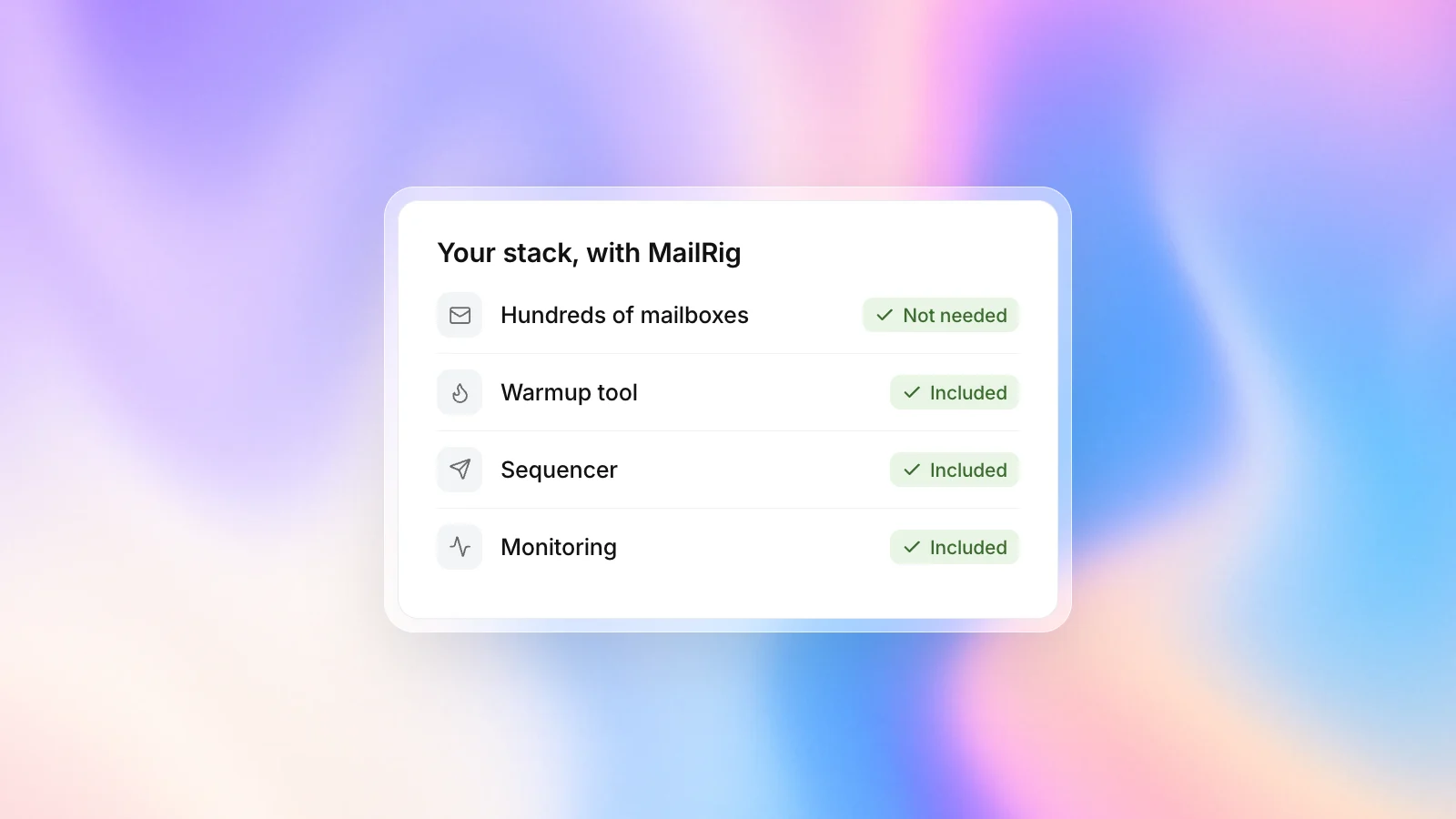

A typical high-volume outbound stack is five or six products that were never designed to know about each other.
This is what consolidates and, more usefully, what does not.
The typical stack
Run through what a farm-based operation is usually paying for and administering:
- Mailbox seats on Google Workspace or Microsoft 365, in the hundreds
- Domain registrations, at 70 to 110 of them
- A sequencer priced per connected inbox or per contact
- A warmup tool, usually priced per mailbox
- An email verification service, priced per address
- Whatever spreadsheet tracks which domains exist and what state they are in
What MailRig takes over
The mailbox fleet, which is the largest administrative burden and the source of most of the others.
The sequencer, reply inbox and contact management, because campaign software and sending infrastructure being separate vendors is how you end up with two systems disagreeing about what happened to a message.
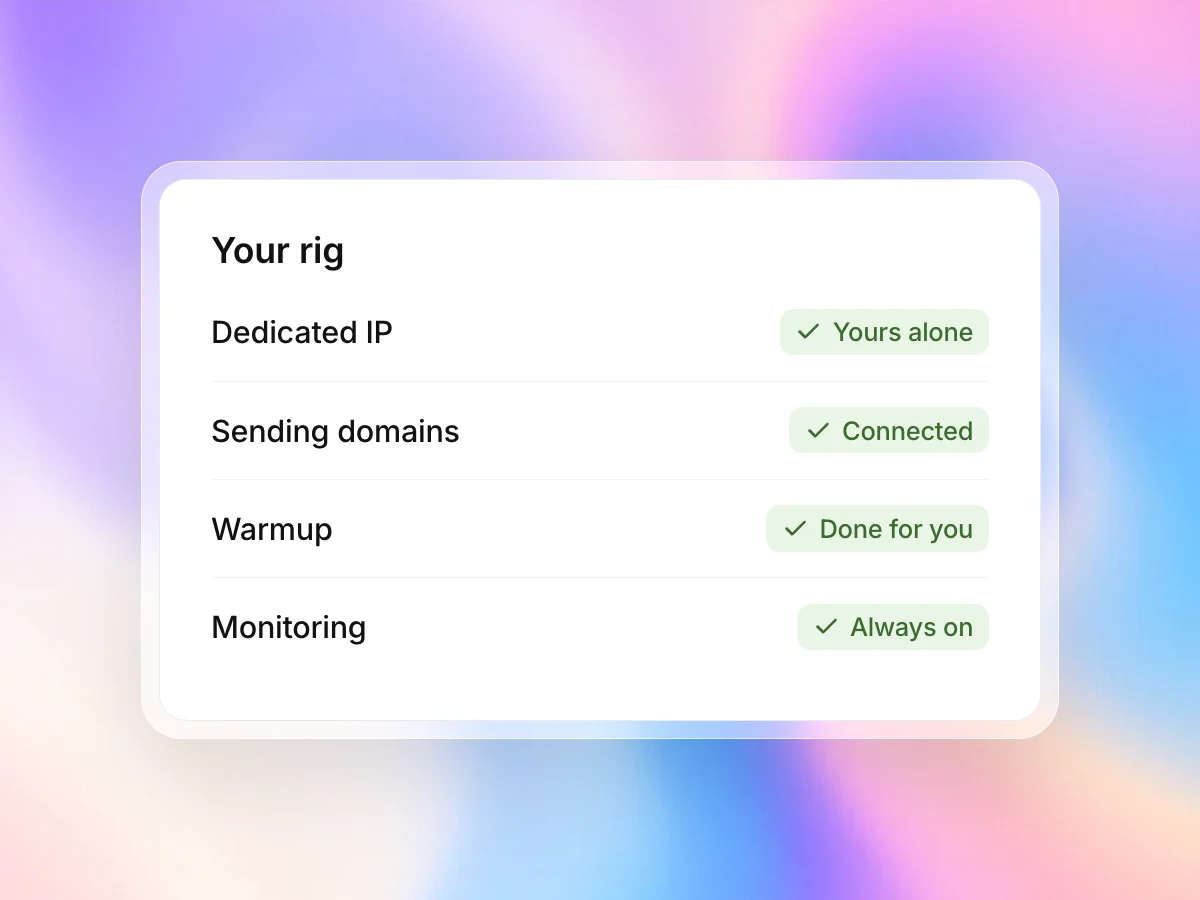
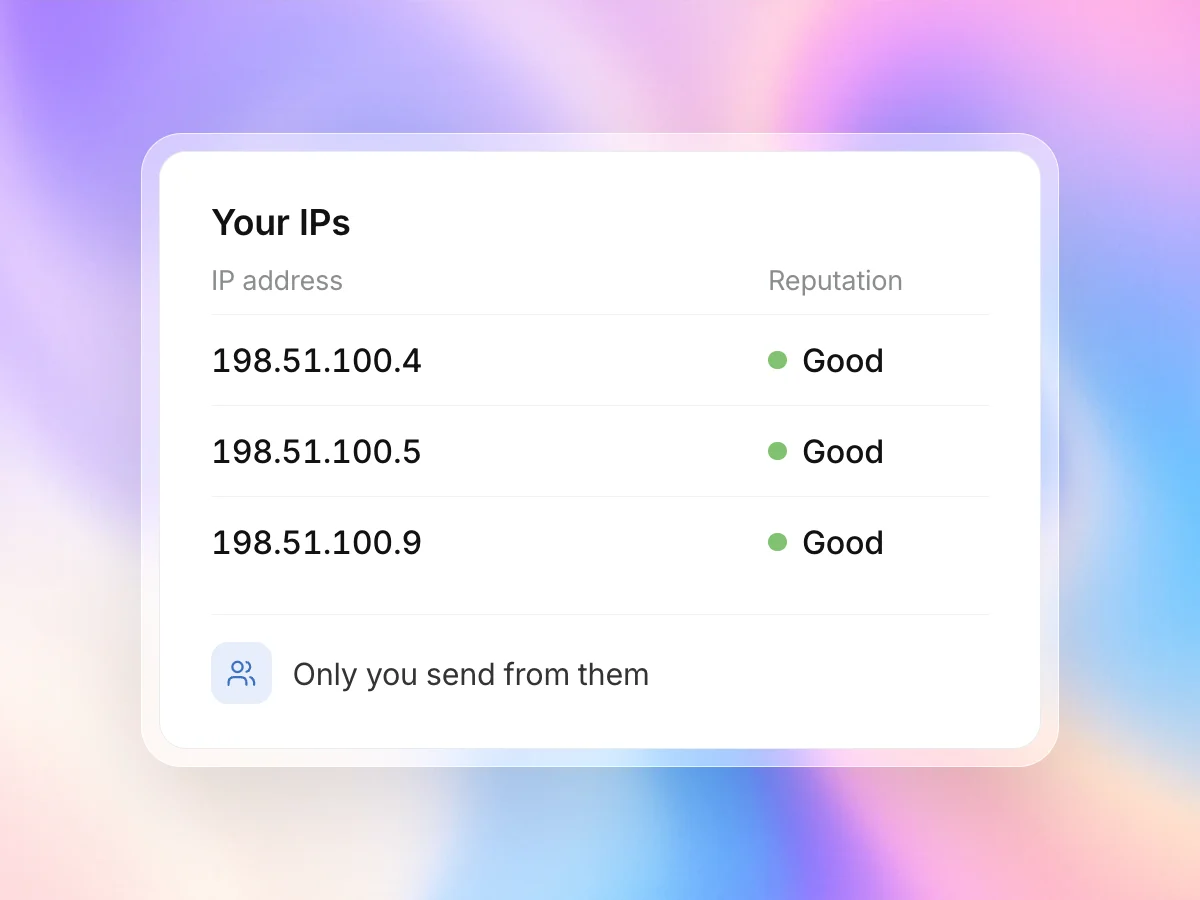
Warmup and reputation monitoring, run against the infrastructure rather than against several hundred individual mailboxes.
And the domain sprawl, in the sense that your outreach domains authenticate against one sending system rather than each carrying its own mailbox cluster.
What stays yours
This is the more important half, and it should be stated plainly.
- Your sending domains. You buy them, you keep them, and they are not locked to the platform
- Your lead data. MailRig does not source or enrich prospects
- Your copy and your offer, which determine complaint rates more than any infrastructure decision
- Your normal company email, which should stay on Google or Microsoft and well away from prospecting
What to expect
Consolidation reduces the number of things you administer and the number of bills you reconcile.
Dedicated infrastructure ramps over your first weeks, with Microsoft a little slower than Google. Keep your current setup sending alongside it, and move campaigns over as capacity grows.


Send 10,000 cold emails a day without renting a single inbox.
Your own dedicated IPs on isolated sending infrastructure, provisioned and warmed for you. One flat price.