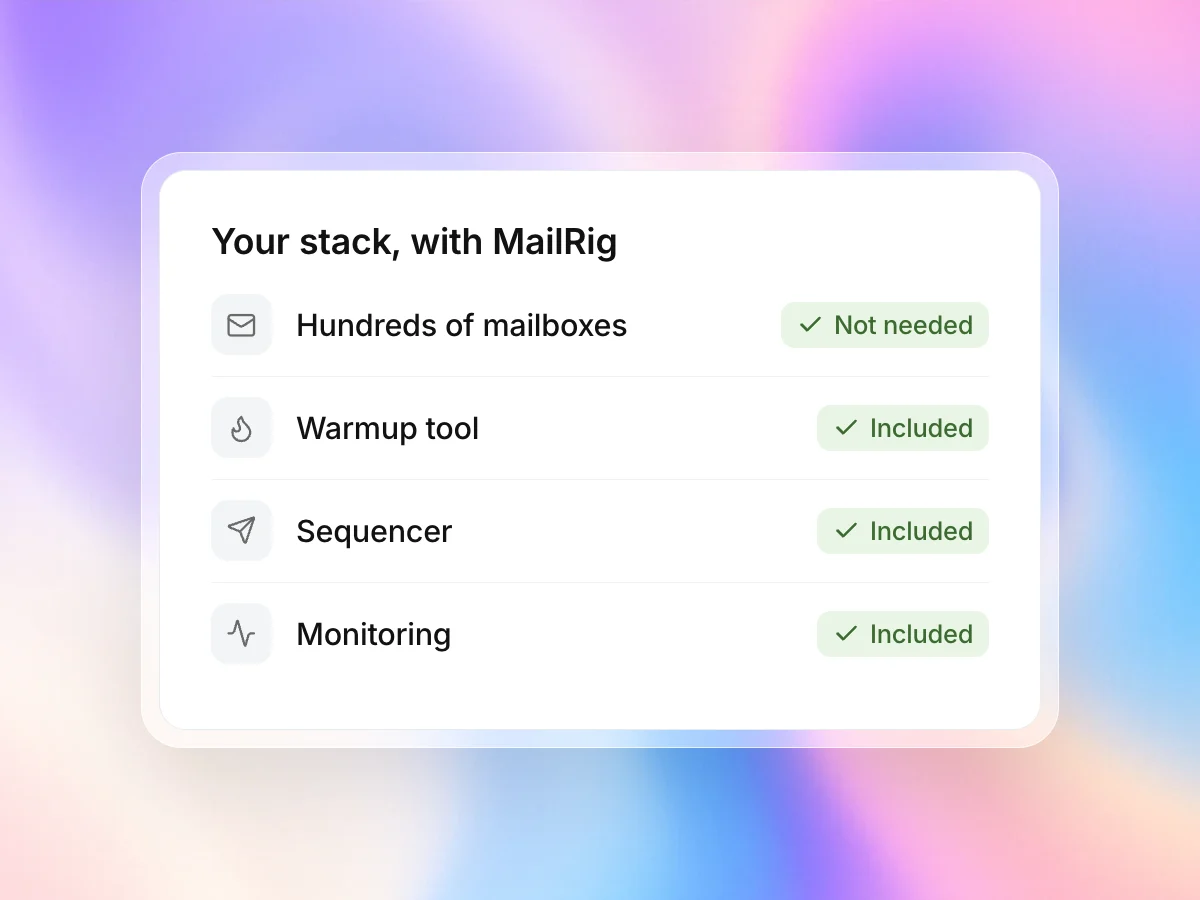
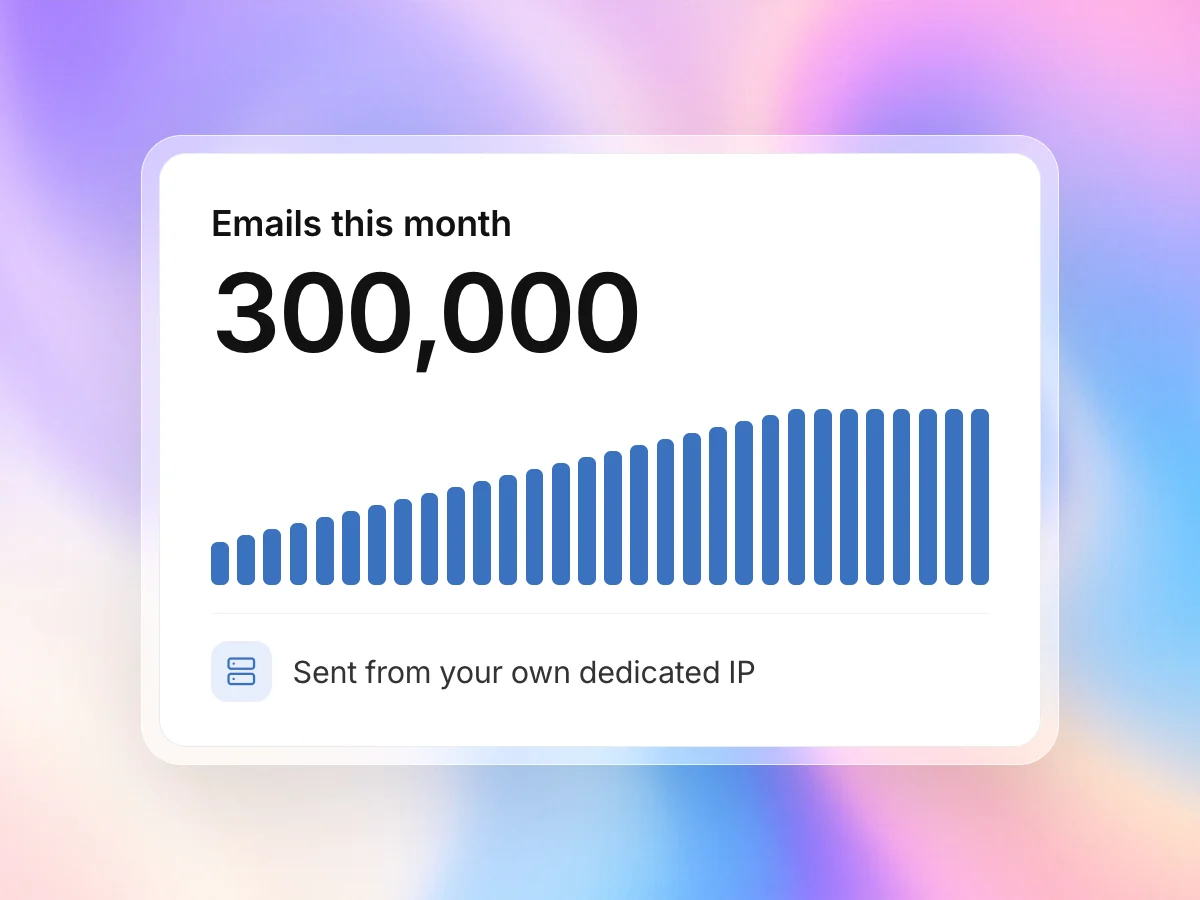
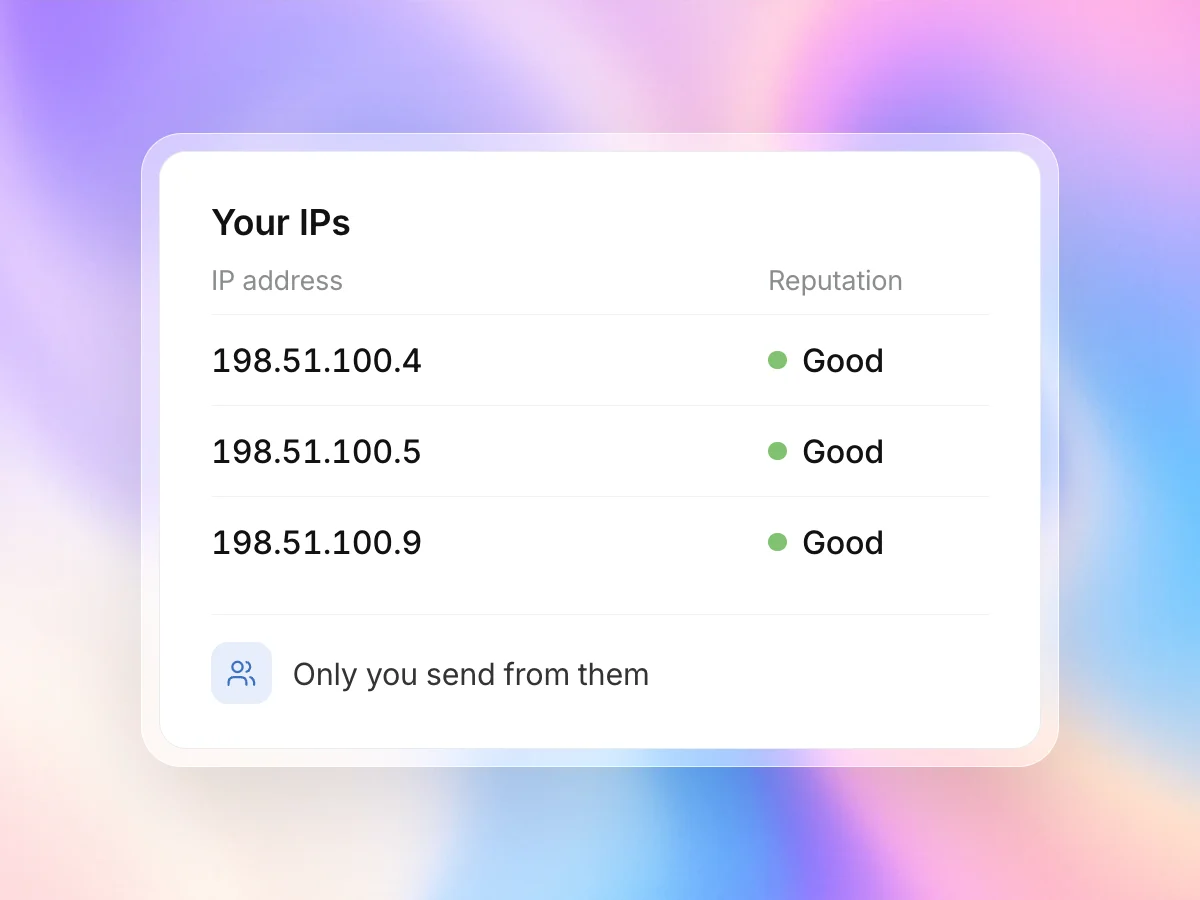
Why MailRig uses dedicated sending infrastructure
How MailRig approaches high-volume outbound differently from platforms built around hundreds of connected inboxes.
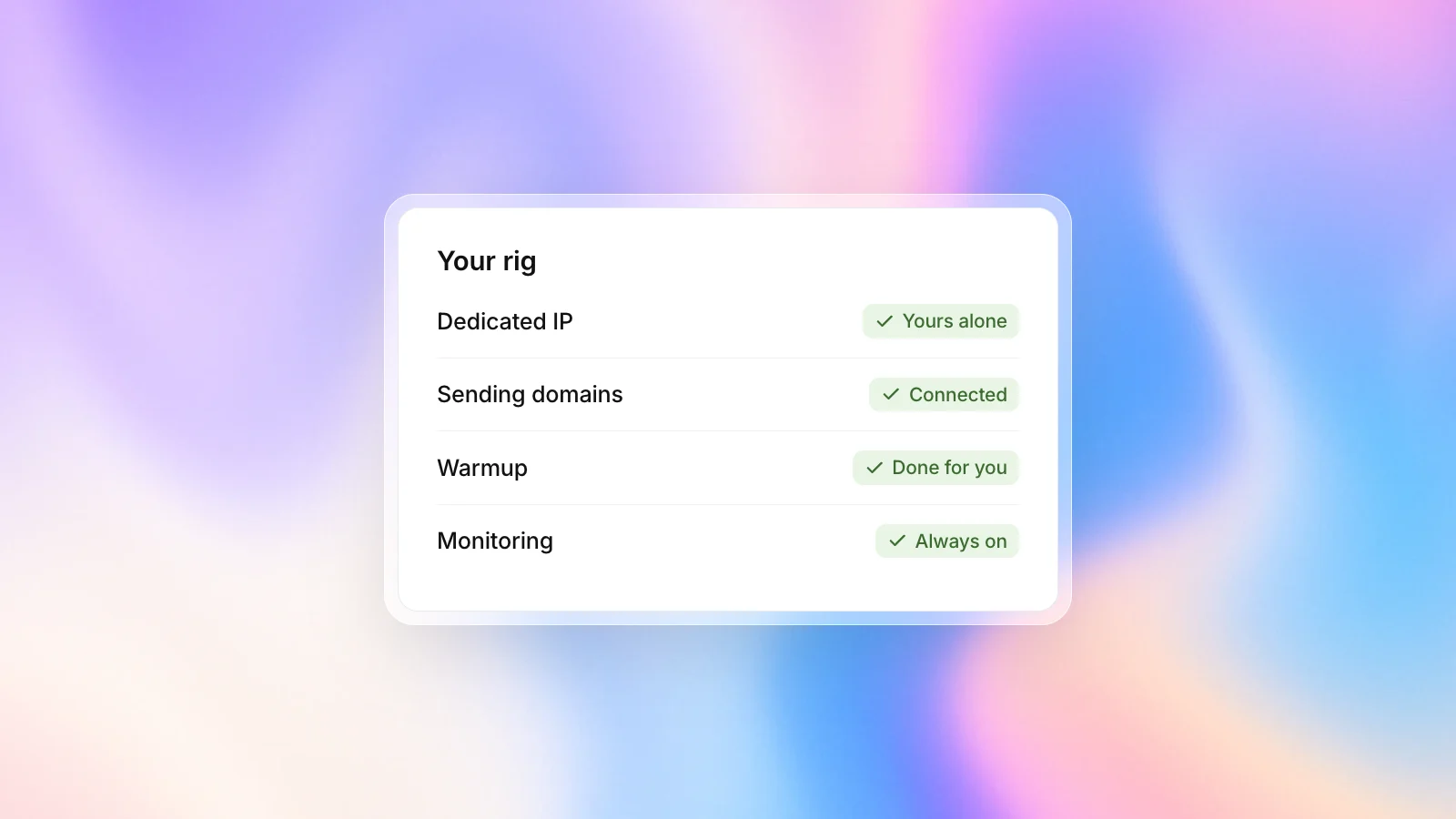

Most outbound platforms are built around connecting mailboxes you supply. MailRig is built around infrastructure assigned to your account, with the campaign software on top of it.
That is a deliberate choice with real costs, and it is worth stating both sides of it plainly.
The problem it addresses
The connected-mailbox model has a fixed ceiling per mailbox. Scaling means multiplying mailboxes, and every additional mailbox adds a domain to authenticate, a warmup schedule to run, and another thing that can quietly stop working.
Past a certain volume, the operation stops being outbound and starts being mailbox administration. That is the problem worth solving.
What we chose instead
Outbound runs through a mail server on IP capacity assigned to your account, with your own sending domains authenticated against it. Capacity is governed by the health of that infrastructure rather than by a per-mailbox cap multiplied several hundred times.
The sequencer, reply inbox, contact management and API sit on top of the same system, so campaign software and sending infrastructure are not two vendors with different opinions about what happened to a message.
What it costs you
This is the part that deserves to be said first rather than buried.
A dedicated IP has no reputation on day one. You build it, and while you are building it your capacity is low. Expect weeks. Microsoft in particular will defer new infrastructure for longer than Google will, and no amount of care changes that.
If you need full volume immediately, dedicated infrastructure is the wrong tool and rented mailboxes are the right one. That is not a sales position, it is arithmetic.
Why isolation matters to us
Sending identities and dedicated capacity are kept separate between accounts, so one customer's campaign does not ride on another customer's reputation.
This is the design decision that makes the rest defensible. Dedicated infrastructure that is quietly shared is just shared infrastructure with a better name on the invoice.
Capacity moves on signals, not on dates
Volume increases when acceptance, bounce, complaint, deferral and blocklist signals support it. It decreases when they do not.
That second half is the part most providers leave out. Capacity that can only go up is not health-gated, it is a schedule with a nicer description.
When something goes wrong, the response is to pause the affected traffic, find the cause and fix it, not to rotate to fresh infrastructure, which discards the reputation you built and leaves the cause in place.
How we earn the inbox
Google, Microsoft and Yahoo decide where every message lands, so we give them every reason to trust yours: clean authentication, a reputation no other sender touches, pacing per provider and live health checks.
You bring the leads, and verified lists perform best.


Send 10,000 cold emails a day without renting a single inbox.
Your own dedicated IPs on isolated sending infrastructure, provisioned and warmed for you. One flat price.